
Prologue
In the following article, and in the above title of what will be, Deo volente, a substantial series, the term “Neo-Lutheran” is used.
A definition is in order:
“Neo-Lutheran/ism” is operatively defined here as the complex of beliefs, practices, and cultural commonplaces which, over the course of the last quarter of the twentieth century and the first quarter of the twenty-first, has come to predominate among Lutherans who, generally speaking, are wont to apply the appellations “conservative”, “confessional”, and “liturgical” to themselves. Increasingly, however, a fusion is underway, one in which the “confessionals” and “missionals” of the days of yore are united in their obeisance to (1) the moral norms of the “Post-War Consensus” and (2) a sacerdotalist conception of the Church and the Ministry.
It is the author’s contention that what is here designated “Neo-Lutheranism” is a perversion of the old Evangelical-Lutheran confession, which confession he resolutely holds to be identical with “the faith once delivered to the saints” (Jude 3).
Beginning in the Middle
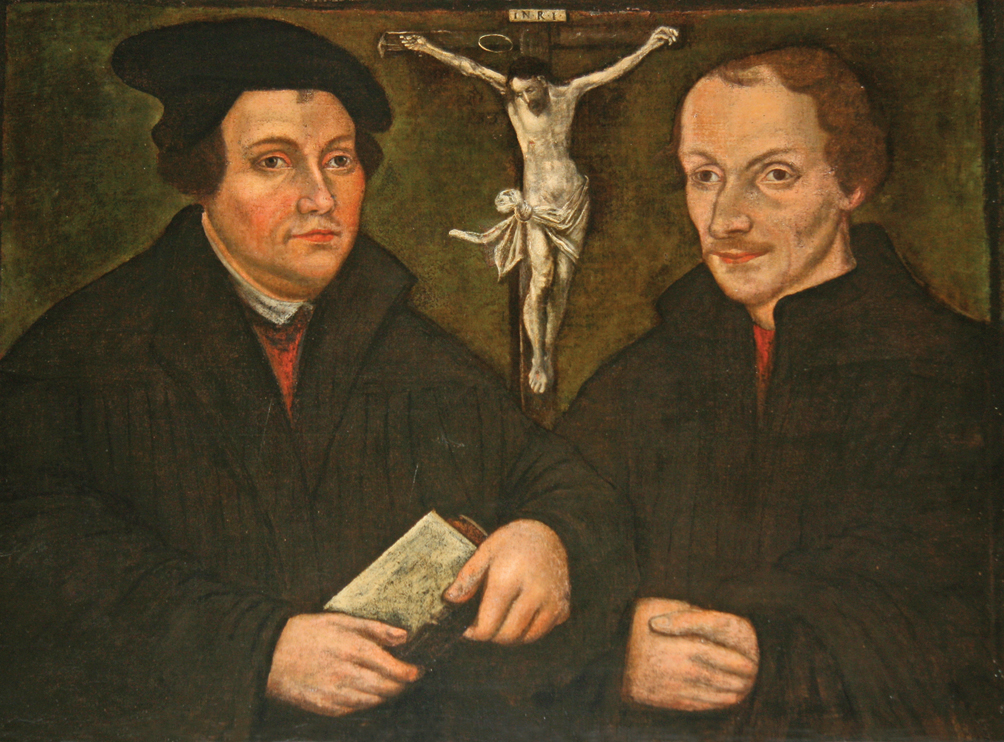
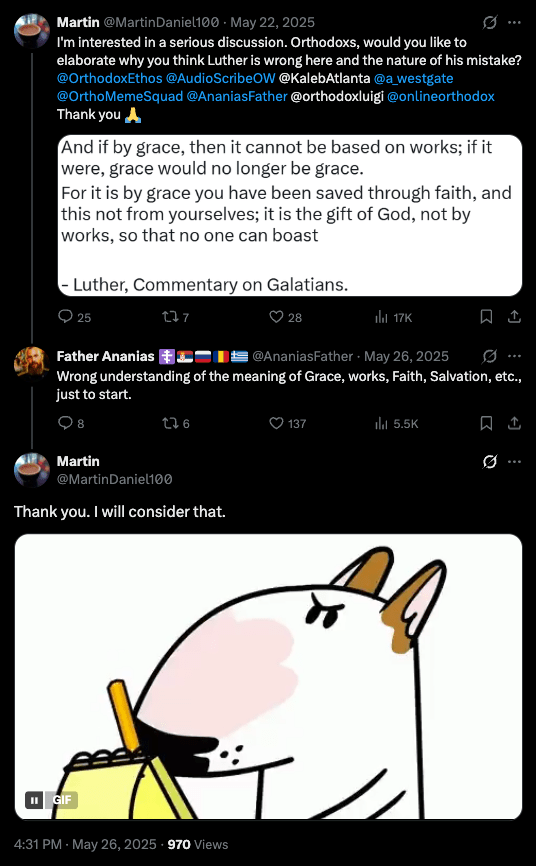
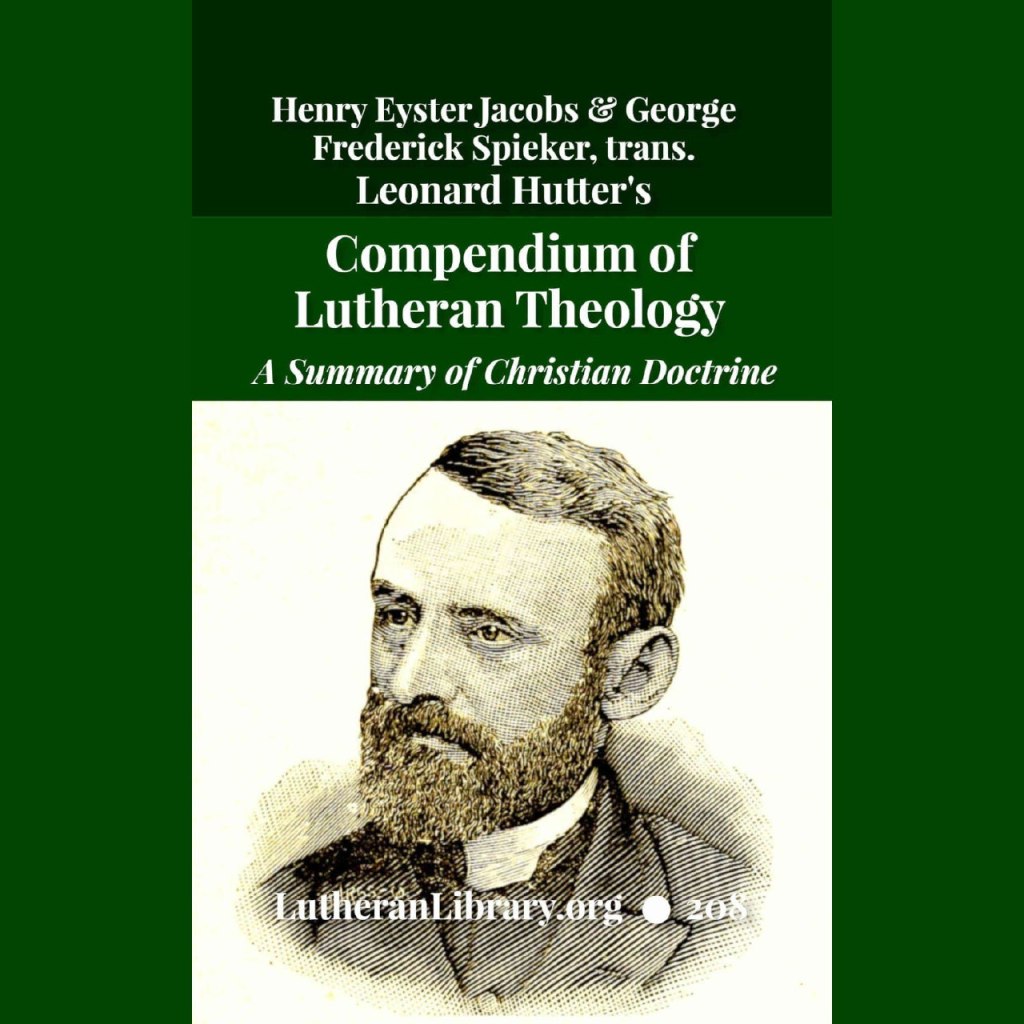
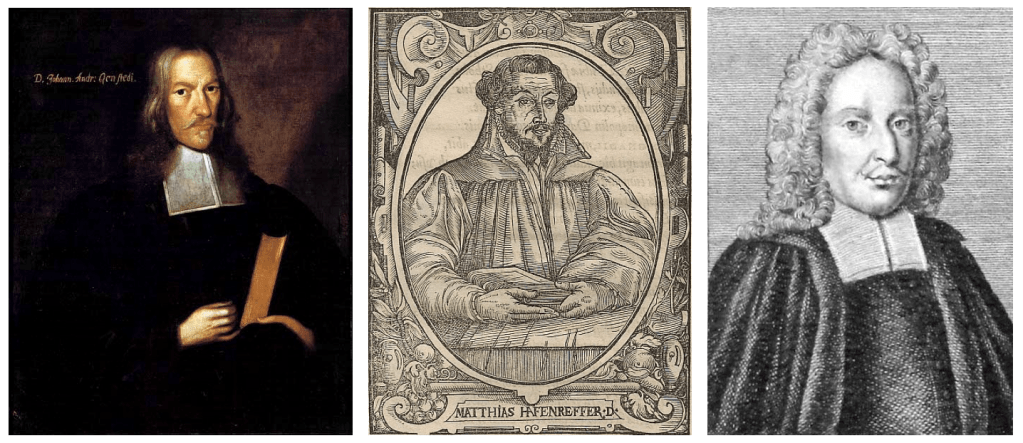
My only quibble is that the man pictured above is not actually Johann Gerhard.
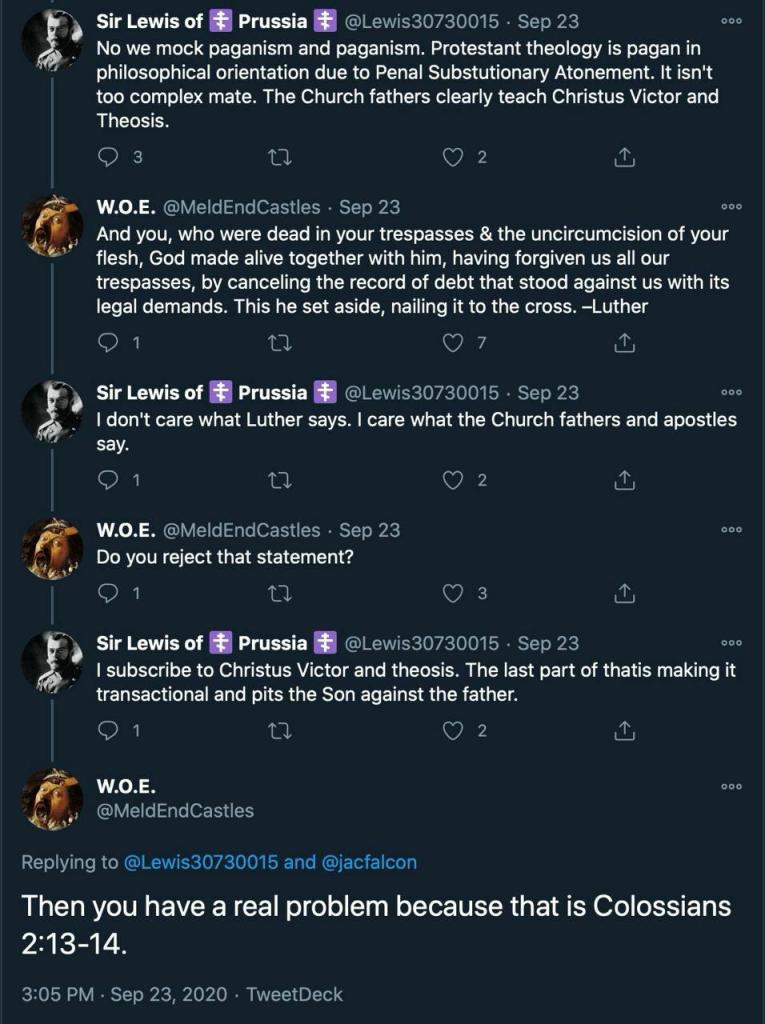
The quotation, for those not on X:
When the pure preaching of the Word is called the mark of the true church, then the term ‘preaching’ is generally taken for the confession of the doctrine that all members of a church, both pastors and hearers, have in common and for the reading of the Biblical texts, which also is a preaching in a certain sense according to Acts 15:21. Preaching in a narrow sense is more properly a function of the pastor rather than of the whole congregation and not absolutely and unconditionally necessary. The extremely trying periods of persecution show that a church can be preserved by the mere reading of Scripture without the public preaching of the pure doctrine.
(Johann Gerhard, Confessio Catholica, fol. 728-29)
While I’d like to let OldLuth’s posting of the above and my QT of it stand together as an enthymeme, I should perhaps spell it out:
Neo-Lutheranism is fundamentally at odds with Scripture in its conception of preaching as being primarily “sacramental.”
Now, there is a certain sense in which preaching can be said to be sacramental, inasmuch as there is a connection between sacrifices and sacraments.1 The main problem lies with the modifier “primarily.” (There are other problems, but today they will only be alluded to.)
Preaching is not primarily sacramental. Preaching is principally an expression of the confession of the members of Christ’s Body in that “definite place” to which they have been called and gathered by the Holy Ghost.2 As such it is primarily sacrificial, in the true and evangelical sense of that term (expounded at length in Apology XXIV).
Preaching is “the fruit of lips confessing His name” (cf. Heb 13:15), a species of Christian conversation. It is distinct from other species of that genus, yes, but it cannot be alienated from them.

When people talk about “preaching,” typically what they have in mind is the proclamation and exposition of the Scriptures in church. But not all preaching is public, i.e., in the midst of the congregation. There is also private preaching, i.e., person to person, according to one’s calling as a Christian.
Christians are exhorted by St. Paul, “Let no corrupt communication proceed out of your mouth, but that which is good to the use of edifying, that it may minister grace unto the hearers” (Eph 4:29).
Likewise: “Let the word of Christ dwell in you richly in all wisdom; teaching and admonishing one another in psalms and hymns and spiritual songs, singing with grace in your hearts to the Lord” (Col 3:16).
Now, if you want to insist on calling the offices of Christian friendship, in which a brother warns, rebukes, admonishes, exhorts, consoles, and encourages another from the Word of God, something other than “preaching”, you are welcome to do so, but the fact remains that what pastors do from the pulpit is not categorically distinct from what all Christians do to and for one another in the household of faith — and, as God gives opportunity, for those outside of it as well: speak and apply the life-giving Word of God.
If what Gerhard says above is denied, or even just ignored, the notion can easily arise that the called and ordained ministers of the church are something other than the public servants of God’s peculiar people in that place who, as representatives and on behalf of their fellow members, are duty-bound to re-present to them the things of “the salvation which is common to [them] all” (Jude 3).
Called and Ordained Servants of the Ministerium
I’ll stop with the coy circumlocutions:
In the Neo-Lutheran schema, it is vehemently denied that a pastor is the representative of and agent on behalf of the Christians in a particular place, i.e., a congregation. Rather (it is insisted), pastors represent and act on behalf of Christ . . . as though this were something other than representing and acting on behalf of those who are “members of His body, of His flesh, and of His bones” (Eph 5:30 . . . but not in your Lutheran Study Bible), have His mind (1 Co 2:16), and are gathered together in His name (Matt 18:20).
But there’s the rub:
Neo-Lutherans do not believe that Christians qua Christians — you know, the “folks” who make up congregations — actually do have the mind of Christ . . . until a member of the Ministerium arrives. They do not believe that the call to the public ministry is mediated through believers. Not really. They regard the “call process” as a quaint formality — a sop for “the people.” In reality (they believe) the call is mediated through — and authorized by — the Ministerium itself.3 The Ministerium represents Christ, you see, and ministers (pastors) represent the Ministerium.
Pastors, then, are not really members of the congregations they serve. Sure, they are officially on the rolls and in the directories as such, but this is mere sentimentality: if things get rough with and for the Body of Christ in that place, odds are good that the Ministerium’s man will get “divinely called” to some other congregation.
Does “a called and ordained servant of the Word” need permission, or even a positive reference, from the congregation he intends to depart from in order to be received as a minister in good standing at another? No, of course not. Does an unordained man need a positive reference (a “transfer”) in order be received as a member in good standing at another congregation? Yes, of course.
. . . but this a pilot post, not an e-book, so I’ll refrain (for the time being) from going into any more detail regarding LCMS Corp Horse Trading.
The upshot is this: Neo-Lutherans do not believe that Christ is present where two or three believers gather in His name unless at least one of those believers is “ordained.”
Let that one sit with you for a bit, because it is about as strong a delusion as there could be (2 Thess 2:1-12, vide v. 11). From it flows a second which is like it: Neo-Lutherans believe that if an “ordained” man is not to be found in a given set of two or three believers, that problem cannot be solved internally. Mind, it’s not just that they believe that it should not be solved internally, other things being equal — no; they believe that it cannot be.
Don’t get distracted by the scare-quotes for the time being: ordination is a real thing, but not in the sense in which it is understood in Neo-Lutheranism.

Far and away the most flustered and apoplectic, though, are the seminarians, for whom what Luther says on this topic (in general, but especially here) is nothing short of nightmare-fuel, as it would seem to dash to pieces what is, for many of them, their most cherished hope: that they will soon escape from the urine-warm kiddie-pool of “the laity” and swim in the clean and free waters of true Christianity as members of the Ministerium, true, mighty ἰχθύας at last . . . oh, and also win the respect of their RC/EO tradfag mutuals.
Neo-Lutheran Preaching

When it comes to preaching, then, those in the grip of the Neo-Lutheran strong delusion believe that it is the pastor’s task to attend to the deep things of God, pick a few which would be profitable for “the laity” to have a peek at, interpret them (the Scriptures being essentially murky and unclear), and then lightly tank up his hearers with the distillation of his expert labor of rightly dividing: Lawngospel slop.
You might find it passing odd that, no matter which deep things of God go into the still, piping hot Lawngospel is what comes off the boil . . . every single time.
But we haven’t even gotten to the good part yet.
When a Holy Minister brings his expertly prepared Lawngospel into the pulpit and applies it to his hearers — first “hitting them” with the Law, then “hitting them” with the Gospel — something happens:
. . .
I’m not going to attempt a description, because “what happens” is (1) something that Neo-Lutherans bicker about endlessly (they have done this on Facebook literally for decades now, but the squabbling antedates social media), and (2) beside the present point, which is that the something that happens happens because a man from the Ministerium is the one doing it. This will eventually get its own article. For now, here’s a footnote.4
In the Neo-Lutheran schema the purpose of preaching is not to inform, enlighten, instruct, exhort, and make wise but rather to make you, the hearer, experience — sequentially, if your preacher is doing it right — (1) despair, because you are sinful, then (2) joy, because Jesus is not.
It took me almost four decades of being a Lutheran and over two in “confessional Lutheran” circles to finally realize why Lutherans are totally fine with hearing the same Law & Gospel Mad-Lib — lightly edited to fit the propers of the day — week after week ad infinitum:
Preaching, for the Neo-Lutheran, is only slightly about what is said; mainly, it’s about who is saying it.

Do you find this state of affairs unacceptable? Perhaps even just a bit sub-optimal? Well, according to the Neo-Lutherans, that is a “you” problem: you are “dissatisfied with the pure Gospel” and ungrateful; you have itching ears; you are succumbing to the “theology of glory”; you are in danger of “Donatism”; etc., etc.
So speak the men who quench more dimly burning wicks than a monsoon at a Diwali parade (though never do nearly as much good).
Do you see it yet?
Despite all of the references to the “Office of the Holy Ministry” — the OHM, with each letter pronounced so you don’t sound like Siddhartha —, in the Neo-Lutheran schema “the ministry” is not an office. Not really. It is an estate unto itself.
To better prescind from the ideas of duty, task, work, and function (eww, gross), and to give it a little more gravitas, you will hear it referred to in Latin, as I have done here: the Ministerium. Your pastor is not just “a minister” — why, that sounds almost Baptist! No, no — he is a member of the Ministerium.
What is the Ministerium? In the Neo-Lutheran schema, it is nothing less than the continuation of the apostolic choir. It is the thing without which there can be no Church. So, really, it is the Church — fee simple.
The Neo-Lutheran believes that Christ’s promise that “the gates of hell shall not prevail against [His Church]” means not simply that there will always be believers on earth until Christ comes again, but, specifically, that there will be pastors until Christ comes again. Otherwise Christ would be a liar. This is what they understand the axiom “the Church is never without the Ministry” to mean.
By way of illustration: the Neo-Lutheran will say that the reason we can say that the Church existed before the Fall is not because Adam and Eve heard the Word of God and kept it but because Adam was the first pastor.
If you think that this is a caricature, watch and hear for yourself as the president of the “flagship of world confessional Lutheranism,” Concordia Theological Seminary in Ft. Wayne, Indiana, John Bruss, claims that mathétés (disciple) actually means “seminarian”:
Oh, did you think that you were a disciple of Jesus?
Did you think “we have forsaken all, and followed Thee” (Matt 19:27) describes common Christians such as yourself?
How about “No man, having put his hand to the plough, and looking back, is fit for the kingdom of God” (Luke 9:62)? Have you been thinking all this time that this is a sober warning about how every Christian will endure temptation from the world, the flesh, and the devil to forsake “the upward call of God in Christ Jesus” (Phil 3:14)?
Oh my. How embarrassing this must be for you.
For the Neo-Lutheran the Bible could easily be subtitled, The Life and Times of the Ministerium (featuring cameos throughout by the Triune God).
Higher spiritual estates
Examined from another angle, one complementary to the one described above, the Ministerium is a state of perfection. I am using this term in a technical sense, i.e., according to how it is defined by the Antichrist and his followers (which should be ironic, but, given the rest of Neo-Lutheranism’s affinities, is actually apropos). The Lutheran Confessions refer to the topic in numerous places, and it might be helpful to go and read up on it,5 but here is the BLUF:
In the Neo-Lutheran schema, the Ministerium just is a higher spiritual estate. Period. Absolutely zero two ways about it. Young men pursue membership in it with a zeal, angst, and ambition which is at least equal to that of the sensitive youths of Luther’s day who, dissatisfied with the tawdry lot of common Christians, wished to have a truer, more genuine, and altogether more real connection with God and thus rushed into “the religious life.”
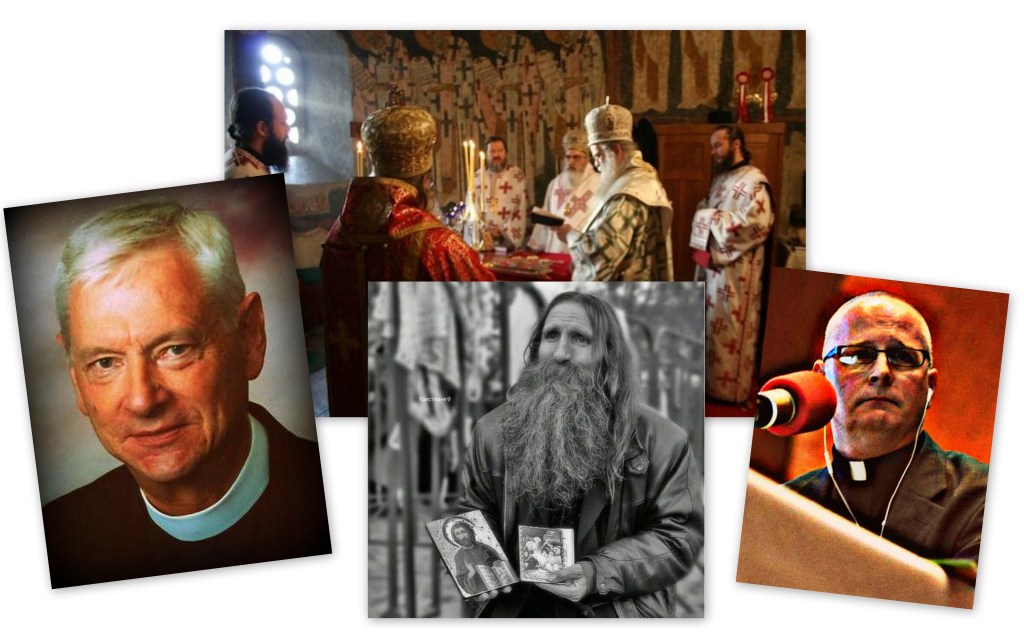
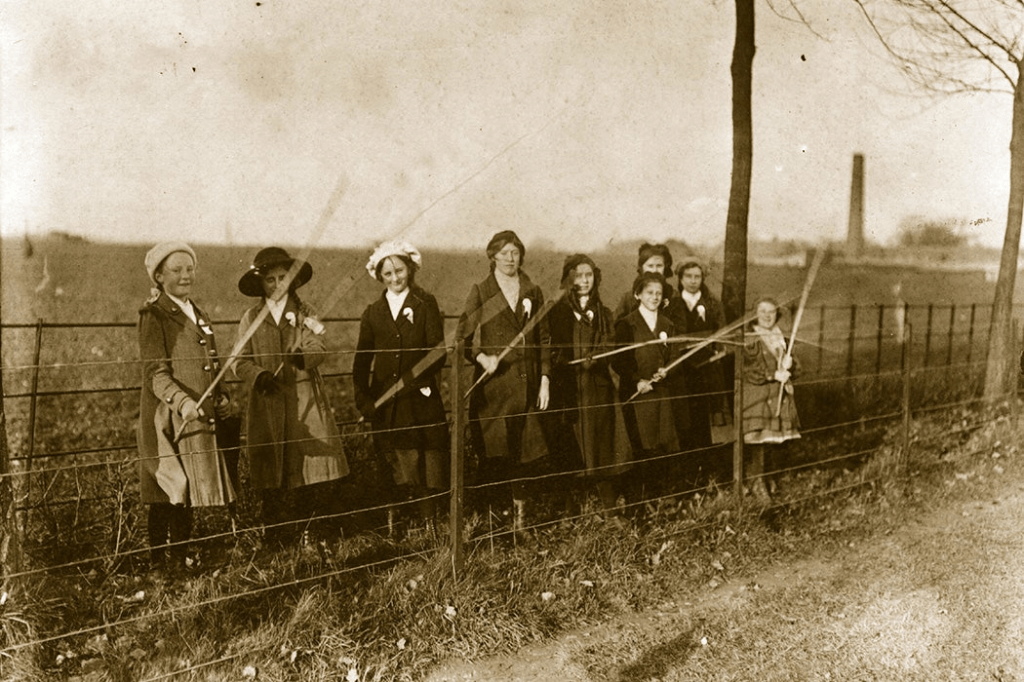
Well, the zeal, angst, and ambition are the same because the wish is the same. See the caption to this image, if you have not already.
If you doubt this, go visit one of the seminaries of the LCMS Corp, and you will see. Each one is a giant co-ed monastery stuffed to the rafters with persons whose greatest need in life is the most obvious and ordinary one: they need to grow up. And as they do that (for about two more decades, after which time, if they still desire the office of a bishop and are fit for it, they should still not go to seminary6), they need to be members of good Lutheran churches. The odds are good that they need to never be in charge of anything or anyone, but it won’t be known how that augurs for awhile. What is certain is this: they should not be “elders” at the age of twenty-six.


“Let no man despise thy youth.”
I don’t want to belabor the point here, partly because I plan to belabor it later, and partly because I am not unsympathetic to the plight of the young, theologically-inclined men who hie to the seminary. “Just be a member of a good Lutheran church” is, unfortunately, an order that grows taller by the day. To be blunt, even the “good” LCMS Corp churches are often oppressively dreary places. Have I not gone on long enough about the type of men whose egos frequently take up residence in them? For two: I have not even begun to talk about the monstrous regiment of women.
Suffice it to say, Lutheran laymen who are reasonably well catechized and possessed of both reasonable intelligence and a functioning Christian conscience run a good chance of finding themselves rubbed raw and driven to distraction at their local LCMS Corp congregation by the alliance between the third sex and the weaker sex. Plenty of them just lump it as their spirits slowly die. But a non-trivial number of these bolt and go to the seminary — if you can’t beat ’em, join ’em.
Join whom? The third sex or the weaker sex? You know, it’s interesting, but that’s actually a live question these days. Moreover, there are a couple different layers to the question. Probably too soon for me to say anything else.
Burdens, friends. We all bear different burdens.

In any event, readers of the Large Catechism — the real one, not the gay one — may recall this passage from Luther’s concluding remarks on the Ten Commandments:
But the other works [of monks, nuns, and “religious”] cause people to open their eyes and ears wide, and men aid to this effect by the great display, expense, and magnificent buildings with which they adorn them, so that everything shines and glitters. There they waft incense, they sing and ring bells, they light tapers and candles, so that nothing else can be seen or heard. For when a priest stands there in a surplice embroidered with gilt, or a layman continues all day upon his knees in church, that is regarded as a most precious work which no one can sufficiently praise. But when a poor girl tends a little child and faithfully does what she is told, that is considered nothing; for else what should monks and nuns seek in their cloisters?
But see, is not that a cursed presumption of those desperate saints who dare to invent a higher and better life and estate than the Ten Commandments teach, pretending (as we have said) that this is an ordinary life for the common man, but that theirs is for saints and perfect ones?
The irony of Luther’s ridicule happening to describe, minutely and directly, the obsessions of spirited young theo-nerds in TYOOL 2026 simply does not seem to register in the Neo-Lutheran mind.
For those unfamiliar with some of these contours:
You need to understand that fewer things are as important to the august members of the Ministerium — and to the supremely gifted and special aspirants thereto — as being Highly Respected and Rightly Regarded as experts in the liturgy. At the end of the day, it is well-nigh impossible to avoid the conclusion that they understand being “a steward of the mysteries of God” in a sense which verges on the esoteric, as though the “Office of the Holy Ministry” were one of stewardship of a mystery religion:
The stewards in shimmering robes (ooooh, perhaps wreathed in smoke?! — omg such aura) conduct and facilitate the sacred rites; you, the awed and entranced lay worshiper, reap the benefit — if you enter into the liturgical moment with proper awe and reverence for them and their work, and if you don’t try to, you know . . . look into the ark (i.e., approach those “deep things of God” on your own, as though you had the mind of Christ).
The best part is, because you do not “have a substance that persists over time” (see this footnote if you missed it earlier), you’re basically a new initiate every single Sunday. Virginal, in a way. You don’t know how the worship of God is done. Come, they will teach you.
Does that make you uncomfortable? It should, because it’s accurate.
The liturgy is necessary. Ceremonies are good. Beauty is essential. Reverence is non-negotiable. That’s all true, and so is this: the Neo-Lutheran obsession with “liturgy” verges on superstition and priestcraft.7 Is it any wonder that the seminaries of the LCMS Corp do nothing half so well as torque kids up to swim the Tiber or — like Arthur Just’s son-in-law — the Bosporus?

I have meant to begin this series for some time. Here goes.
I hope this post and the series which it initiates prove useful to those readers whose consciences are currently suffering under the yoke of the LCMS Corp and other parachurch orgs like it, whether Lutheran or of some other denominational stripe. Your feedback is welcome.
And for those whose consciences are not roused, especially those of this set who think of themselves, and not the Christians whom they serve, as the very priests whose lips guard knowledge on behalf of the Church, I hope that this post and series are nothing but a bucket of burning coals that, by God’s grace, might burn through the seared, insensate scar-tissue and touch some actual nerves.
To the corporate hirelings of the Ministerium:
God has chosen a generation. He has ordained a royal priesthood. He has begotten to Himself a holy nation and a peculiar people, that they should show forth the praises of Him who called them out of darkness into His marvelous light.
You adulterate their praises. You insinuate lies into the confession of their lips. You cry “Peace! Peace!” when there is no peace. You grow fat on their substance.
“In the days of your fasts ye find your pleasures, and all them that are under your power ye wound.”
God sees. God knows. God will avenge.
“And if that evil servant shall say in his heart, My lord delayeth his coming; and shall begin to smite his fellowservants, and to eat and drink with the drunken; the lord of that servant shall come in a day when he looketh not for him, and in an hour that he is not aware of, and shall cut him asunder, and appoint him his portion with the hypocrites: there shall be weeping and gnashing of teeth.”
To the idle watchmen on the walls:
Christ the Lord, He who is Alpha and Omega, cries out unto you: “Remember therefore from whence thou art fallen, and repent, and do the first works; or else I will come unto thee quickly, and will remove thy candlestick out of his place, except thou repent.”
Wachet auf, ruft uns die Stimme.

Thank you for reading. The Boniface Group is the mission society of Holy Trinity Ev.-Lutheran Church of Gem County. If you would like to support our work, you may do so here. To learn more, visit our homepage and start reading from the top. Thank you, and God bless you.
✠
Footnotes
- Readers wishing to explore this topic are encouraged to read On Sacrifice by David Chytraeus (1530-1600); used copies here; new (POD) copies here. ↩︎
- To be clear: by “the confession of the members”, I mean “the doctrine believed, taught, and confessed by the real, baptized, flesh-and-blood Christians who congregate around that pulpit, font, and altar,” not “a clause in the Handbook of a nonprofit corporation with which that congregation, and that preacher, are formally affiliated.”
“[T]he Holy Ghost has called me by the Gospel, enlightened me with His gifts, sanctified and kept me in the true faith; even as He calls, gathers, enlightens, and sanctifies the whole Christian Church on earth, and keeps it with Jesus Christ in the one true faith.” (Small Catechism, Pars II, Art. III, 6)
“[I]t is one thing if God is present, and another if He is present for you. He is there for you when He adds His Word and binds Himself, saying, ‘Here you are to find Me.’ Now when you have the Word, you can grasp and have Him with certainty and say, ‘Here I have Thee, according to Thy Word.’ Just as I say of the right hand of God: although this is everywhere, as we may not deny, still because it is also nowhere, as has been said, you can actually grasp it nowhere, unless for your benefit it binds itself to you and summons you to a definite place.” (Martin Luther, “That These Words Of Christ, ‘This Is My Body,’ Etc., Still Stand Firm against the Fanatics,” AE 37:68) ↩︎ - This is why CTS seminary grads make sure to insult their calling congregations good and hard by “getting ordained” at Redeemer Ft. Wayne before they even show up at their “assignment.” The seminary allows this, perhaps even encourages it, and it goes without saying that no one is forcing Redeemer to participate.
Redeemer has the distinction of being the only church that I know of that has — and I am not making this up — a peephole HDR camera situated vertically above the chancel for capturing that sweet ordination money shot, the exact moment when the indelible character of ordination takes hold. It’s like that flash of light when the sperm fertilizes the egg.
While this may seem absurd and inappropriate to you on multiple levels and may leave you with some additional questions (indelible character?), you need to understand that for the men involved, this is a greater event than baptism: baptism only makes a man a member of the Church; ordination makes a man a member of the Ministerium. ↩︎ - A certain member of the LCMS Corp “Commission on Theology and Church Relations” (CTCR) used to flog this hobby-horse obsessively on Facebook back in the day — well over a decade ago. It sounds fake and gay, and it is, but it is also very insidious and wicked when you think about it, and you’ll readily see how it fits hand-in-glove with every antinomian abomination on the map. I believe this is a direct quote:
“The New Man does not have a substance that persists over time.”
The guy I’m talking about has been waging an autistic war against “substance ontology” ever since the aughts, when I first encountered his blog, which was mainly his scribble pad during his time as a grad student at the ELCA’s Luther Seminary under (you guessed it) Steven Paulson.*
Basically, these guys buy into this skeptical post-Kantian notion that things only exist in relation to being “addressed” by God’s speech (think of J. L. Austin’s theory of the “speech-act” and the twentieth-century “turn to linguistics” in continental philosophy). They try to find Scriptural warrant for this in places like Romans 4:17 where it says that God “calls the things that are not as though they were.” This they turn into this grand metaphysical proposition. According to this theory, man is just a sort of principle that reacts on contact to the two polarized tractor beams of divine address/speech-act, namely Law and Gospel. When you’re being addressed by and believing the Law, you’re the Old Man, and when you’re being addressed by and believing the Gospel, you’re the New Man. The one is more natural than the other; of the two “words”, the “revolutionary” one is the Gospel (in/by/with which God “overcomes” Himself — this is Oswald Bayer’s big thing).
In modern Lutheranism, the “hearers of the Word” only believe the Gospel for the duration of the time that it’s actually being spoken to them. Then they leave the divine service and go “live out their vocations” in the Left-Hand Kingdom by being indistinguishable from the heathen, until the next time they unwittingly stumble into the path of the speeding Gospel bus and are repented, faithed, bodied, and bloodied by Christ. Because “the New Man does not have a substance that persists over time.” QED.
* Who is Stephen Paulson? Judge the man by his words: “Then finally in the words on the cross, ‘My God, my God…’ he made the public confession of a sinner . . . . Confessing made it so, and thus Christ committed his own, personal sin — not only an actual sin, but the original sin. He felt God’s wrath and took that experience as something truer than God’s own word of promise to him” (Paulson, Lutheran Theology, 105).
This blasphemer is the bosom-buddy of certain seminary professors at CTS and a contributor to numerous doctrinal books published by the LCMS Corp, including the infamous Luther’s Large Catechism with Annotations and Contemporary Applications. ↩︎ - Ctrl/Cmd-F search these phrases in the online single-page version of the Book of Concord: “state of perfection”; “religious estate”; “spiritual order”; “higher and better life”. ↩︎
- We’ll address the cancer of modern seminaries in later posts, but if you don’t already smell the roast, you’re not going to make it, so go ahead and close this tab. ↩︎
- “Every single rite is made orderly if close attention is given to what persons, what worship, and what time are appropriate and it is seen that nothing is produced that is confusing or preposterous. Indeed order enforces that ceremonies are few in number and moderate, namely nothing whatever womanish or trifling, no ludicrous spectacles or dramatic gesticulations, and most are of this sort, which is the usage in the Papacy. Such ceremonies are burdensome and crushing to the conscience.” (Balthasar Meisner, Collegii Adiaphoristici Calvinianis (1628); trans. Roy Axel Coats, sec. 38) ↩︎