Crucifixes
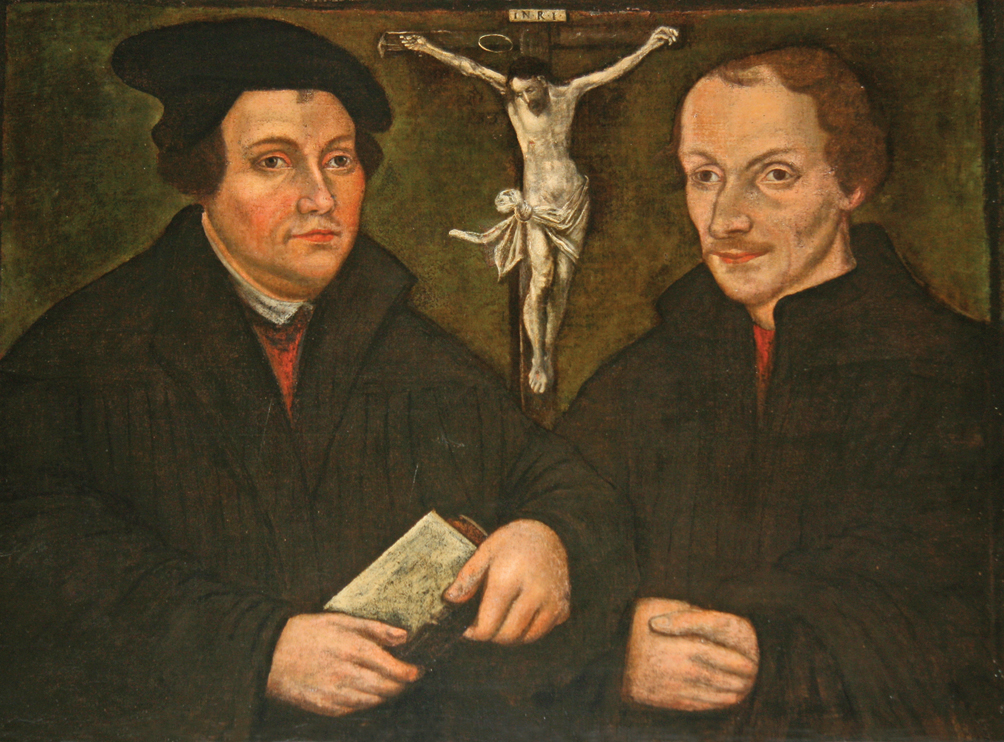
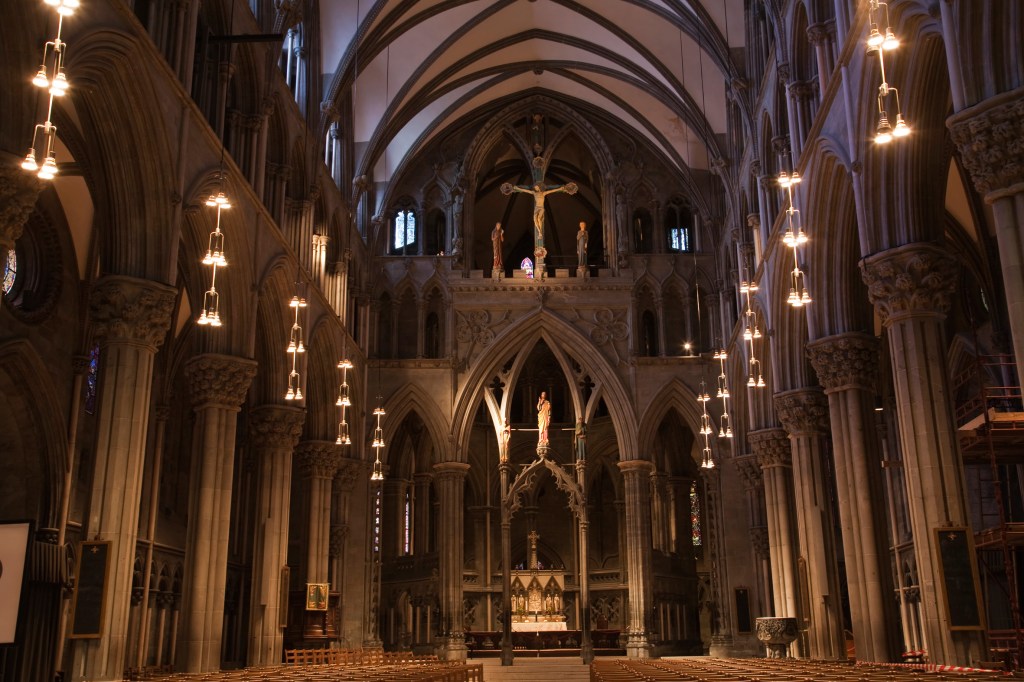
The custom of holding a crucifix before a dying person has kept many in the Christian faith and has enabled them to die with a confident faith in the crucified Christ. (Sermons on John, Chs. 1-4, 1539; Luther’s Works [=LW] 22, 147)
It was a good practice to hold a wooden crucifix before the eyes of the dying or to press it into their hands. This brought the suffering and death of Christ to mind and comforted the dying. But the others, who haughtily relied on their good works, entered a heaven that contained a sizzling fire. For they were drawn away from Christ and failed to impress His life-giving passion and death upon their hearts. (Sermons on John, Chapters 6-8, 1532; LW 23:360)
[W]hen I hear of Christ, an image of a man hanging on a cross takes form in my heart, just as the reflection of my face naturally appears in the water when I look into it. If it is not a sin but good to have an image of Christ in my heart, why should it be a sin to have it in my eyes? (Against the Heavenly Prophets, 1525; LW 40:99-100)
Images & Statues of Saints
Did not Noah, Abraham, Jacob build altars? [Gen. 8:20; 12:7; 13:4; 13:18; 33:20]. And who will deny that? We must admit it. Again, did not Moses erect a bronze serpent, as we read in his fourth book (Num. 21:9)? How then can you say that Moses forbade the making of images when he himself made one? It seems to me that such a serpent is an image, too. How shall we answer that? Again, do we not read also that two birds were erected on the mercy seat [Exod. 37:7], the very place where God willed that he should be worshipped? Here we must admit that we may have images and make images, but we must not worship them, and if they are worshipped, they should be put away and destroyed, just as King Hezekiah broke in pieces the bronze serpent erected by Moses [II Kings 18:4]. (Invocavit Sermons: The Third Sermon, March 11, 1522; LW 51:82)
We must, therefore, be on our guard, for the devil, through his apostles, is after us with all his craft and cunning. Now, although it is true and no one can deny that the images are evil because they are abused, nevertheless we must not on that account reject them, nor condemn anything because it is abused. This would result in utter confusion. God has commanded us in Deut. 4:19 not to lift up our eyes to the sun [and the moon and the stars], etc., that we may not worship them, for they are created to serve all nations. But there are many people who worship the sun and the stars. Therefore we propose to rush in and pull the sun and stars from the skies. No, we had better let it be. Again, wine and women bring many a man to misery and make a fool of him [Ecclus. 19:2; 31:30]; so we kill all the women and pour out all the wine. Again, gold and silver cause much evil, so we condemn them. Indeed, if we want to drive away our worst enemy, the one who does us the most harm, we shall have to kill ourselves, for we have no greater enemy than our own heart, as the prophet, Jer. 17 [:9], says, “The heart of man is crooked,” or, as I take the meaning, “always twisting to one side.” And so on — what would we not do? (loc. cit., The Fourth Sermon, March 12, 1522; LW 51:85)
Now we do not request more than that one permit us to regard a crucifix or a saint’s image as a witness, for remembrance, as a sign as that image of Caesar was. Should it not be as possible for us without sin to have a crucifix or an image of Mary, as it was for the Jews and Christ himself to have an image of Caesar who, pagan and now dead, belonged to the devil? Indeed the Caesar had coined his image to glorify himself. However, we seek neither to receive nor give honor in this matter, and are yet so strongly condemned, while Christ’s possession of such an abominable and shameful image remains uncondemned. (Against the Heavenly Prophets, 1525; loc. cit., 96)
And I say at the outset that according to the law of Moses no other images are forbidden than an image of God which one worships. A crucifix, on the other hand, or any other holy image is not forbidden. (ibid., 85-86)
Where however images or statues are made without idolatry, then such making of them is not forbidden. . . . [M]y image breakers must also let me keep, wear, and look at a crucifix or a Madonna . . . as long as I do not worship them, but only have them as memorials. (ibid., 86, 88)
But images for memorial and witness, such as crucifixes and images of saints, are to be tolerated . . . And they are not only to be tolerated, but for the sake of the memorial and the witness they are praiseworthy and honorable . . . (ibid., 91)
The Sign of the Cross
In the morning, when you rise, you shall bless yourself with the holy cross and say: “In the name of God the Father, Son, and Holy Ghost. Amen.” Then, kneeling or standing, repeat the Creed and the Lord’s Prayer. If you choose, you may, in addition, say this little prayer: ‘I thank Thee, my Heavenly Father, through Jesus Christ, Thy dear Son, that Thou hast kept me this night from all harm and danger; and I pray Thee to keep me this day also from sin and all evil, that all my doings and life may please Thee. For into Thy hands I commend myself, my body and soul, and all things. Let Thy holy angel be with me, that the Wicked Foe may have no power over me. Amen.’ . . . In the evening, when you go to bed, you shall bless yourself with the holy cross and say [the same], etc. (Small Catechism, Appendices, Daily Prayers, “How the Head of the Family Should Teach His Household to Pray Morning and Evening,” 1-4)
[M]any a terrible and shocking calamity would befall us if, by our calling upon His name, God did not preserve us. I have myself tried it, and learned by experience that often sudden great calamity was immediately averted and removed during such invocation. To vex the devil, I say, we should always have this holy name in our mouth, so that he may not be able to injure us as he wishes. For this end it is also of service that we form the habit of daily commending ourselves to God, with soul and body, wife, children, servants, and all that we have, against every need that may occur; whence also the blessing and thanksgiving at meals, and other prayers, morning and evening, have originated and remain in use. Likewise the practice of children to cross themselves when anything monstrous or terrible is seen or heard, and to exclaim: “Lord God, protect us!”, “Help, dear Lord Jesus!” etc. (Large Catechism, I, The Second Commandment, 71-74)
If the devil puts it into your head that you lack the holiness, piety, and worthiness of David and for this reason cannot be sure that God will hear you, make the sign of the cross, and say to yourself: “Let those be pious and worthy who will! I know for a certainty that I am a creature of the same God who made David. And David, regardless of his holiness, has no better or greater God than I have.” (Psalm 118, LW 14:61)
If you should have a poltergeist and tapping spirit in your house, do not go and discuss it here and there, but know that it is not a good spirit which has not come from God. Cross yourself quietly and trust in your faith. (Sermon for the Festival of the Epiphany, LW 52:178-79)
Further reading:
- Adiaphoristic Controversy, Third Disputation: “Concerning Images and their Lawful Use among Christians,” by Balthasar Meisner – PDF [Credit: Scholastic Lutherans]
Thank you for reading. The Boniface Group is the mission society of Holy Trinity Ev.-Lutheran Church of Gem County. If you would like to support our work, you may do so here. To learn more, visit our homepage and start reading from the top. Thank you, and God bless you.
✠