
Author: Cousin Quartus
On the Sacredness of Sermons
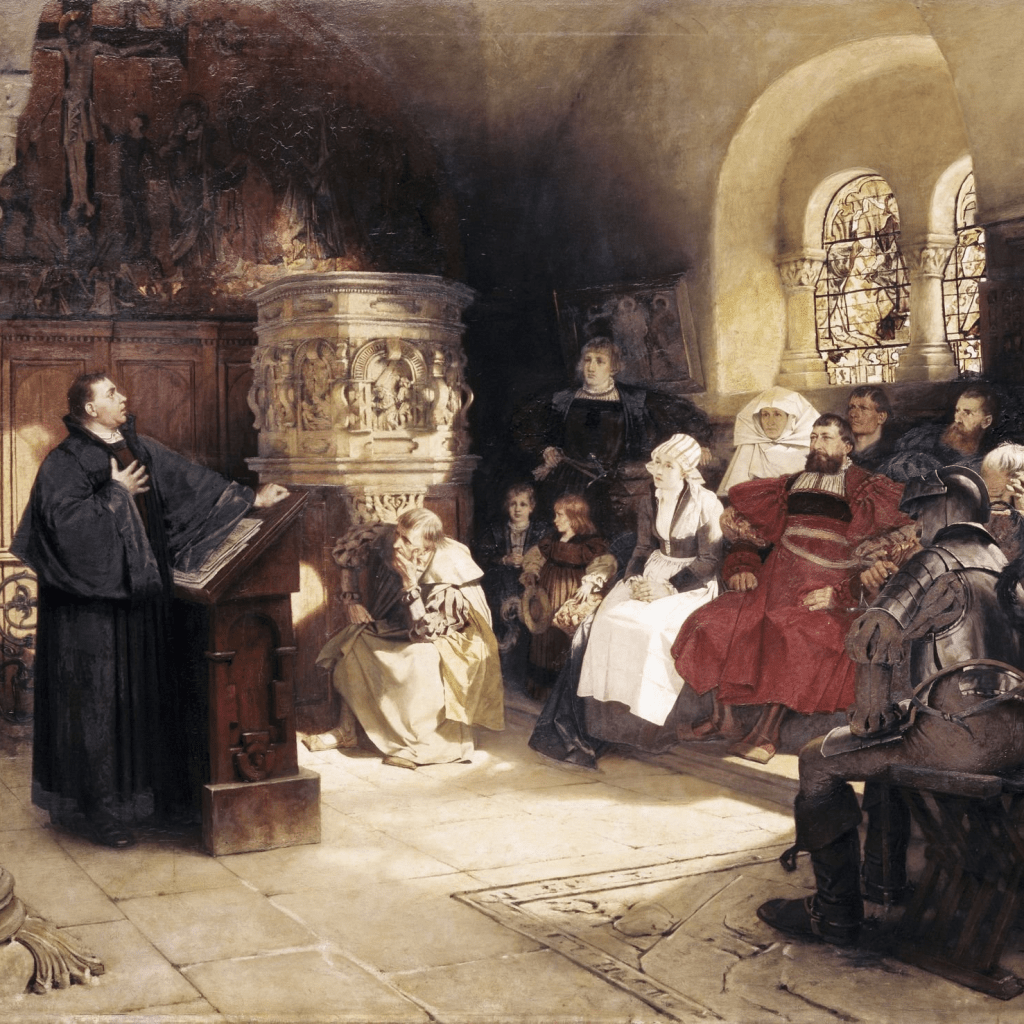
The propagation of sermon recordings to the general public fundamentally alters the nature of preaching. It causes the preacher to preach with potential abstract anybody anywhere in mind, rather than the actual saints who are congregated around the Word and sacraments in that particular place and time.
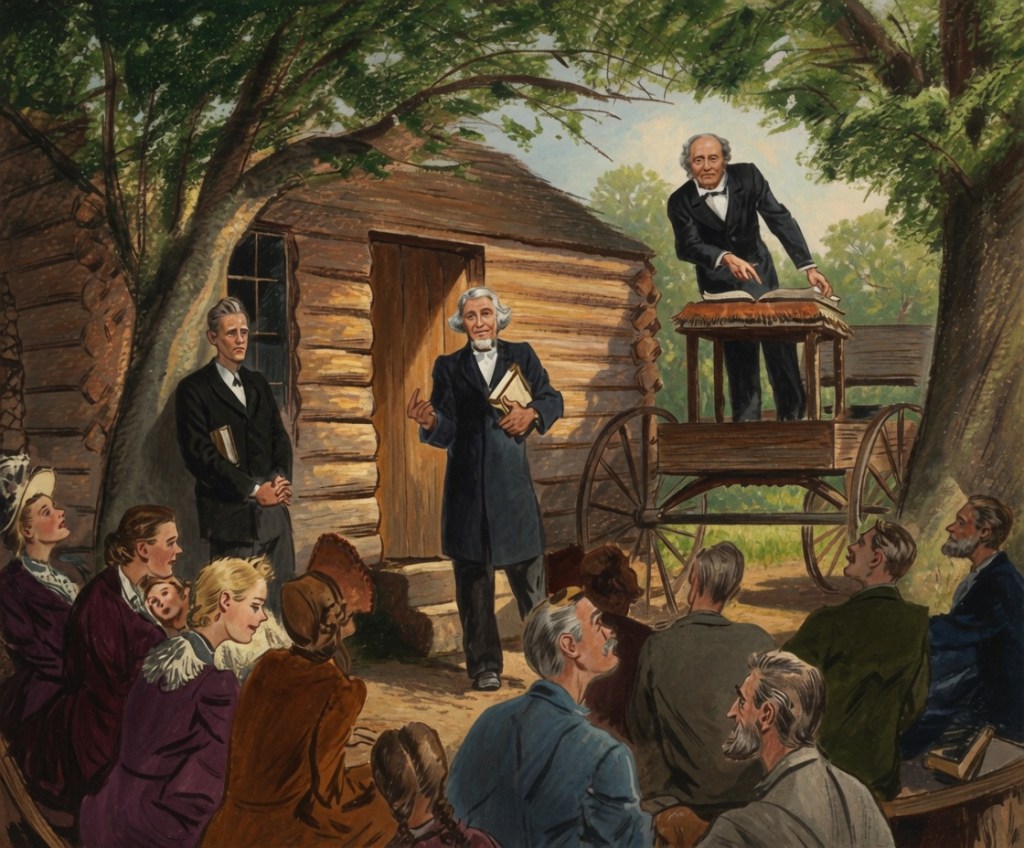
It is impossible to listen to a recorded sermon. It is impossible to watch a recorded sermon. You cannot read a sermon on the internet or even in a book. You cannot share one with a friend — not one that’s already been preached, at any rate. For a sermon, as a species of Christian conversation, just is a thing articulated, heard, and engaged in in real time and space. A sermon is not the sound of words. A sermon is not a field of text.
When we hear the term “sermon”, we naturally think of the public preaching of the Word on a Sunday or other holy day, to and in the midst of the congregation, and it is well that we should. Nevertheless, it is also good to remember that the term “sermon” in its original derivation means something like discussion.
This is no assertion on the mere basis of etymology: 1 Corinthians 14 is essentially St. Paul giving commands regarding the proper conduct of a doctrinal discourse and discussion — in other words, it is St. Paul saying how the sermon should be regulated in a godly way.
The great early twentieth-century Lutheran theologian Georg Stoeckhardt (1842-1913) makes incidental, yet fairly extensive, reference to this topic here in this writing. “Frequently a discussion connected to the instructional discourses,” he comments, “a sort of conversation on the teaching. Whoever had not understood something asked the teacher, and this point was discussed.”
Nowadays it is more customary for the instructional discourse to take place in the midst of the service (the “sermon” as we know it) and for the discussion to take place afterwards (the commonplace of “Bible Class”), although if I had to guess the split on how many after-church Bible classes are devoted to the preacher fielding questions about his sermon versus him boring his fellow saints to distraction with a one-man hobbyhorse rodeo . . . well, I’m not sure I could do it.
There’s nothing wrong per se with the separation between the two halves of the ancient sermon. That said, it wouldn’t be wrong per se to keep them together, although given that the separation is now a longstanding custom in a matter of adiaphora — since well before the Reformation, in fact —, we Lutherans, at least, would seem to be admonished by our Confessions to retain it.
While we’re on the subject, though . . . when was the last time you witnessed or participated in the other half? But actually — not just as a perfunctory five minutes before you proceeded to spend an hour and half on three verses of Habakkuk (interspersed with anecdotes about a discussion on Facebook from the previous week), as though you were graciously indulging a whim from the proles and more or less doing them a favor.
No, but when was the last time you took as long as was needed to give an account of your doctrine that day and answer your fellow Christian men’s questions about it?
No, not because you are magnanimous, but because you owe it to them, and you owe it to your Lord. You are not infallible, and being apt to teach is part of what is required of you. It is conceivable that you might even receive correction from them. What? came the word of God out from you? or came it unto you only?
And would you not be glad to receive it? Or does that only happen at Winkels and conferences, when you’re among fellow professional Christians?
We do not put sermons on our website at Holy Trinity. We can’t. It would be impossible. To be a bit insufferable: sermons are events. They cannot be put anywhere.
We do record the sermons and make the recordings available to . . .
- members who were absent
- catechumens who might wish to re-listen and discuss them with absent family members, and
- on occasion, local inquirers here in the Treasure Valley.
Yes, preaching is public, but let’s be clear about what is meant by this. In his annotations on the 1943 Synodical Catechism of the old LCMS, Edward Koehler points us in the right direction:
Question 275: How does the local congregation publicly administer the Office of the Keys? * Answer: According to God’s will the Christian congregation chooses and calls men as ministers, who in the name of Christ and in the name of the congregation publicly perform the functions of the Office of the Keys. (The pastoral office a divine institution, Acts 20:28; Eph. 4:10-12.)
Koehler: The word ‘publicly’ here does not mean openly, before the eyes of the public, but it means in the name of the public, which, in this case, is the local congregation. While each true believer in Christ is a royal priest in his own right, and should, therefore, by word and deed ‘show forth the praises’ of God (650), he will not remain aloof from other believers, but rather seek the fellowship of those that hold the same faith as he (690), and join a Christian congregation in order that together with others he may do what the Lord commanded all of them to do. — Since all members of a congregation have the same right and duty, no one may take it upon himself to act in the name of all others, but he must by them be called or commissioned to preach, etc., (Rom. 10:15).
Read the rest here. (Here is an unroll for those not on X.)
The propagation of sermon recordings to the general public fundamentally alters the nature of preaching. It causes the preacher to preach with potential abstract anybody anywhere in mind, rather than the actual saints who are congregated around the Word and sacraments in that particular place and time.
“Not true, I can do both!”
Even if we were to grant for the sake of argument that you could (you actually can’t), that would still be a problem, because you are only supposed to be doing one of those things at that time. For once in your life, stop trying to multitask.
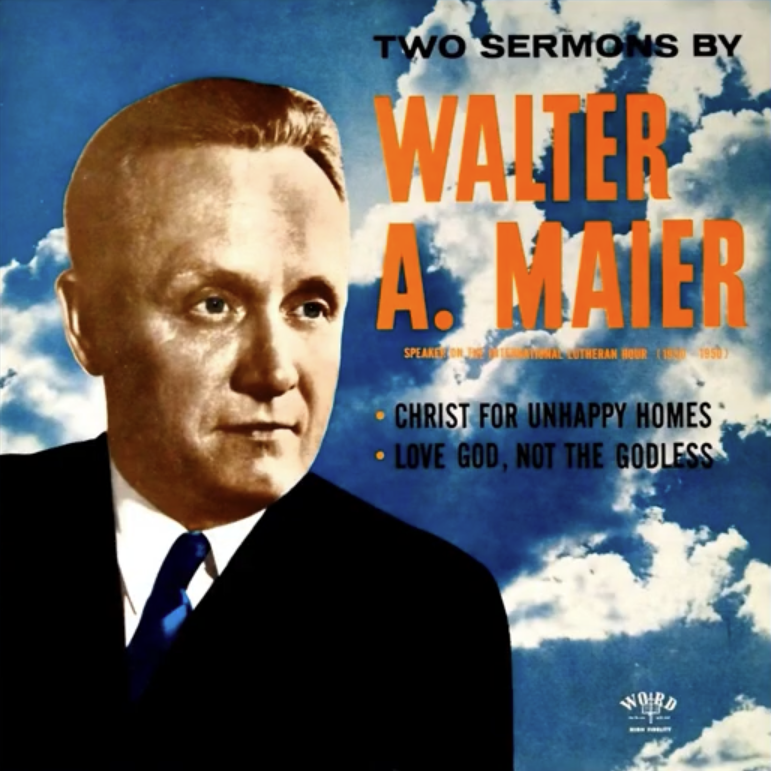
“Oh yeah, what about WAM? He preached on the radio!”
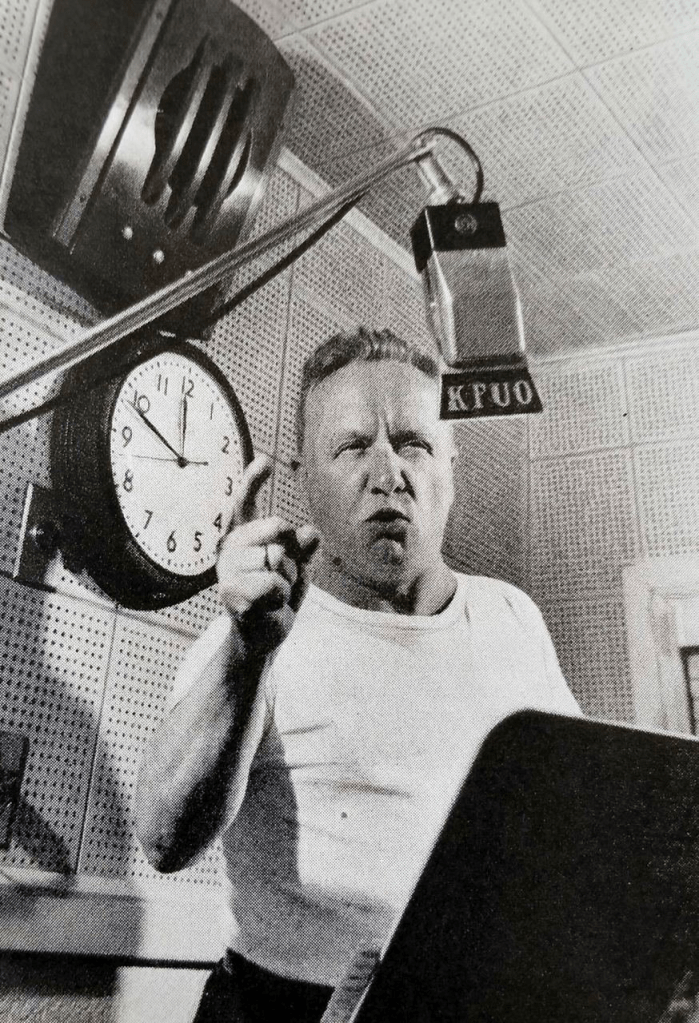
Do you think that’s the interior of a church? Is there a congregation sitting just outside the frame?
Walter A. Maier did not record the sermons he preached to his congregation and then broadcast the recordings on the radio. He gave his radio addresses on the air, yes. In a certain sense these were indeed sermons. They were great. We are big WAM fans here. There is a place for dedicated public addresses outside the four walls of the church. Podcasts are a species of that. I’m not sure why a video of your talking face and twitching waxed mustache needs to be involved, or how you justify this use of your time to your congregation, but I digress — clerical looksmaxxing, theobro/theonerd narcissism, and related topics will have to be taken up some other day.
Yes, there is a place for the public address in evangelism, other things being equal.
But do not pretend that you, immediately scurrying into the vestry with your iPhone after the service to upload your sermon recording onto Spotify and shop the link around to your fanbase, real or imaginary, are doing the same thing that WAM and others did.
(Old guys who started doing this before the rise of social media get a pass in my book, unless their sermons are trash. Hello, Clint.)
A sermon outline or partial transcript, created before or after the factum of a sermon itself, is not a sermon. It is a theological essay, a meditation, a devotional writing. Being a different thing, it serves a different function — perhaps a salutary one, but in any case never the same one.
Our congregation will very occasionally publish outlines, i.e, partial transcripts, of past sermons preached by our pastors. If and when this is done, it is done by the common consent and agreement of the men of the church and in their name. We pray that these outlines would be edifying and profitable to any who read them.
It seemed good to us, in view of the recent controversy over the propriety of denigrating the Athanasian Creed, to publish an outline of the sermon preached at Holy Trinity Ev.-Lutheran Church of Gem County on the Feast of the Holy Trinity, 2026. You may read it here.
Thank you for reading. The Boniface Group is the mission society of Holy Trinity Ev.-Lutheran Church of Gem County. If you would like to support our work, you may do so here. (Crypto options coming soon.) To learn more, visit our homepage and start reading from the top. Thank you, and God bless you.
✠
Two Sermons by Walter A. Maier: “Christ for Unhappy Homes” and “Love God, Not the Godless”
Dear Aunt Francine: Why Communions are Closed
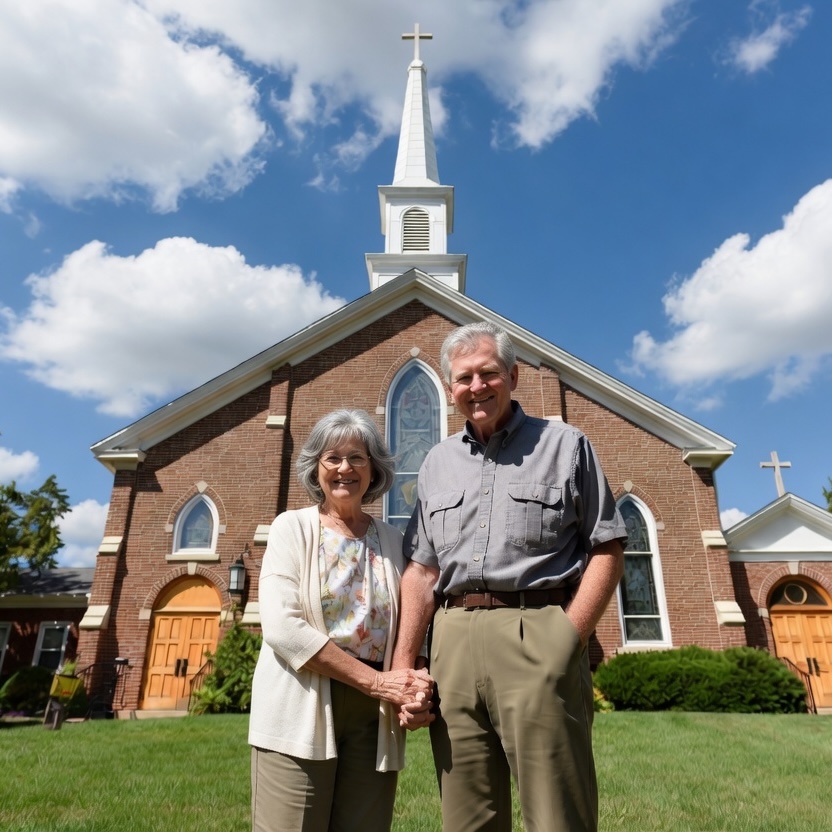
Most of the names in this letter are not real.
Dear Aunt Francine,
I wrote this letter back in October, but I never got around to sending it. Time got away from me, and I returned to it the week before your arrival out here. I’m sorry for that unintended delay.
I know that you want to take communion at Holy Trinity, and I know that you noticed that we didn’t have it when you and Uncle Art were visiting in October. Jake mentioned to me that you had said as much when you were visiting with the Watsons.
When we consider the matter of who would receive the Lord’s Supper, there are two pertinent questions:
- Who should receive the Lord’s Supper?
- Who should receive the Lord’s Supper from the same altar?
The answer to (1) is that all Christians are bidden to eat the Lord’s Supper. The answer to (2) is that only those who are united in doctrine should partake of the Lord’s Supper from the same altar/at the same table.
With that said, the determination that there is, in fact, unity in doctrine is not made individually or personally but congregationally. This was the position of the Evangelical Lutheran Synod of Missouri, Ohio, and Other States at its inception and for the better part of a century afterwards.
Leaving aside for the moment the question of whether the LCMS of today really is the same entity as the Evangelical-Lutheran synod established by C. F. W. Walther and his saintly contemporaries, it suffices to say that the same orderly approach to communion fellowship is still taken by conservative LCMS pastors and congregations — and rightly so.
For example, when Pastor Perestroika, speaking on behalf of the congregation of St. James, says that “those who are not members in good standing of this congregation or of a sister congregation of the LCMS or of one of our sister church bodies are asked not to come forward for communion at this time” (I’m paraphrasing from memory), he is correctly stating what the basis for communion fellowship must be — although his statement also assumes that church discipline, closed communion, etc., are practiced uniformly and consistently throughout the LCMS, and this is definitely not the case.
Fellowship among congregations is a two-way street. As such, it is not something that a congregation can simply declare. Even if we were inclined to do so, Holy Trinity could not simply declare itself to be in fellowship with Prince of Peace in Autumndale or St. James in Hobble Hill — or any other congregation, for that matter. Public mutual agreement is necessary. LCMS congregations are in fact prohibited by the constitution of Synod (“The Handbook”) from entering into fellowship agreements with other church bodies (and congregations) by unilateral congregational decision, independently of the Synod. LCMS congregations are bound by the fellowship agreements of the Synod as a whole, although plenty of congregations and pastors choose to ignore those agreements — and I would be remiss not to point out that this is covenantbreaking (see Romans 1:31), regardless of how one may feel about it.
Pastor Perestroika and the men of St. James believe that membership matters when it comes to communion fellowship, which is why St. James practices closed communion, i.e., admittance to the Sacrament based on membership: a person’s membership at St. James — or at a congregation which is itself a member of the Missouri Synod (or of a sister synod such as the AALC).
Pastor Keindingus and the leadership of Prince of Peace do not believe that membership matters — a person’s membership in a particular congregation or a congregation’s membership in a particular fellowship — when it comes to the Lord’s Supper, and they probably have never given much thought to the matter, which is why Prince of Peace practices open communion.
In keeping with longstanding orthodox Lutheran practice — which St. James at least tries to uphold, and which Prince of Peace does not uphold —, we at Holy Trinity, do not presume to practice communion fellowship where none has been established by mutual congregational declaration.
I know that you know this, but it bears repeating: closed communion is not in itself a declaration that those not invited to the table are not Christians. It is not necessarily even a declaration that those not invited to the table are personally heterodox. It is simply a recognition that communion fellowship in the Visible Church is established by, and exists among, congregations.
Certainly there is an element of sadness in all of this. We wish things were different. With the saints beneath the heavenly altar, we cry out “How long, O Lord?” as we behold the warfare against the Church, which manifests also among and within the congregations which claim the name of Christ. But we do not do so in a sanctimonious way. “For there must be also divisions among you,” St. Paul writes, “that they which are approved may be made manifest among you” (1 Co 11:19). “It was needful for me to write unto you, and exhort you that ye should earnestly contend for the faith which was once delivered unto the saints,” St. Jude writes (Jude 3). John Calvin echoes the apostles with these words: “Accursed is that peace of which revolt from God is the bond, and blessed are those contentions by which it is necessary to maintain the kingdom of Christ.” ( — a bit ironic, given how much energy the Calvinists have spent over the course of their history on trying to get Lutherans to commune with them, but we’ll let that lie for now.)
To summarize: divided congregations are not brought into concord in “the faith which was once delivered unto the saints” by celebrating the Sacrament together; no, but they celebrate the Sacrament together if and only if such concord is achieved. To knowingly do the former is a failure to discern the Lord’s Body every bit as flagrant as any sacramentarian denial of the Real Presence, and it incurs the same judgment (1 Co 11:27ff).
The situation in which conscientious Christian women find themselves in the Lutheran Church these days is certainly vexing. To date, we have had one unmarried gal come to us from Beautiful Savior over in Little Bog, the LCMS church where the Kettlebells used to be members. She comes by herself, without any family. To my knowledge, she does not live under her father’s roof; even if she did, he does not exercise any kind of headship with respect to her church attendance, etc., and so she has been “turned out” in this respect. All this to say, she has been going through catechesis with two others (both men) at our home on Tuesday nights for the last few months, and she will be received as a member on Sunday, April 12, along with one of them (whom she is now dating). Though she is already Lutheran by profession, she has not communed at Holy Trinity up until the present, because she has not been a member.
The situation with married women is somewhat different. Having pondered the matter in the light of Scripture to the best of my ability and conferred with various Christian brothers, this is where I have landed:
A Christian woman has a duty to abstain from the Lord’s Supper if the congregation where she is a member is, to her knowledge, publicly heterodox, i.e., if its confession (to include the teaching and preaching of its pastor or pastors) plainly contradicts the Catechism. If the congregation is at least publicly orthodox, however, she should submit her conscience to the decision of her husband as her head. Matters beyond her own congregation are not her direct concern, e.g., her congregation’s affiliation, synodical membership, etc. They are her husband’s direct concern, whether or not he recognizes them as such. If he is not doing his duty with respect to those things, she is not culpable for that.
I’ll admit, I find the situation you’re currently in to be a bit tenuous, inasmuch as Uncle Art won’t commune at St. James but is “fine with” (perhaps passively so) you doing so. But that is not nothing. You’re not refusing to submit to him. I know you wish he would take more of an active interest in these matters, but in the meantime, satis est. You and Uncle Art are members at Prince of Peace, Prince of Peace does not publicly contradict the Catechism, and Prince of Peace and St. James are in fellowship.
Orthodox Lutheran congregations ought to be in fellowship with each other, just as orthodox Lutheran Christians ought to recognize one another and assemble together for worship (Hebrews 10:25), which regular assembly just is an orthodox Lutheran congregation. I hope and pray that Prince of Peace and St. James both realize that the old Missouri Synod is gone and that the current-year LCMS corporation stands for false doctrine, and I hope that they and their pastors act accordingly and disassociate from it.
In the meantime, I pray that you can be at peace with the way things are, even though they are not ideal, even though our congregations are, for the time being, not in communion fellowship. I encourage you to continue doing what you are doing with a good conscience, even as you continue to pray that Prince of Peace and St. James (and others) would allow themselves to be reformed by the Lord of the Church in accordance with His holy Word.
We greatly look forward to your visit.
Love, your nephew,
Quartus
New on the Crew: Isaac Dragomir
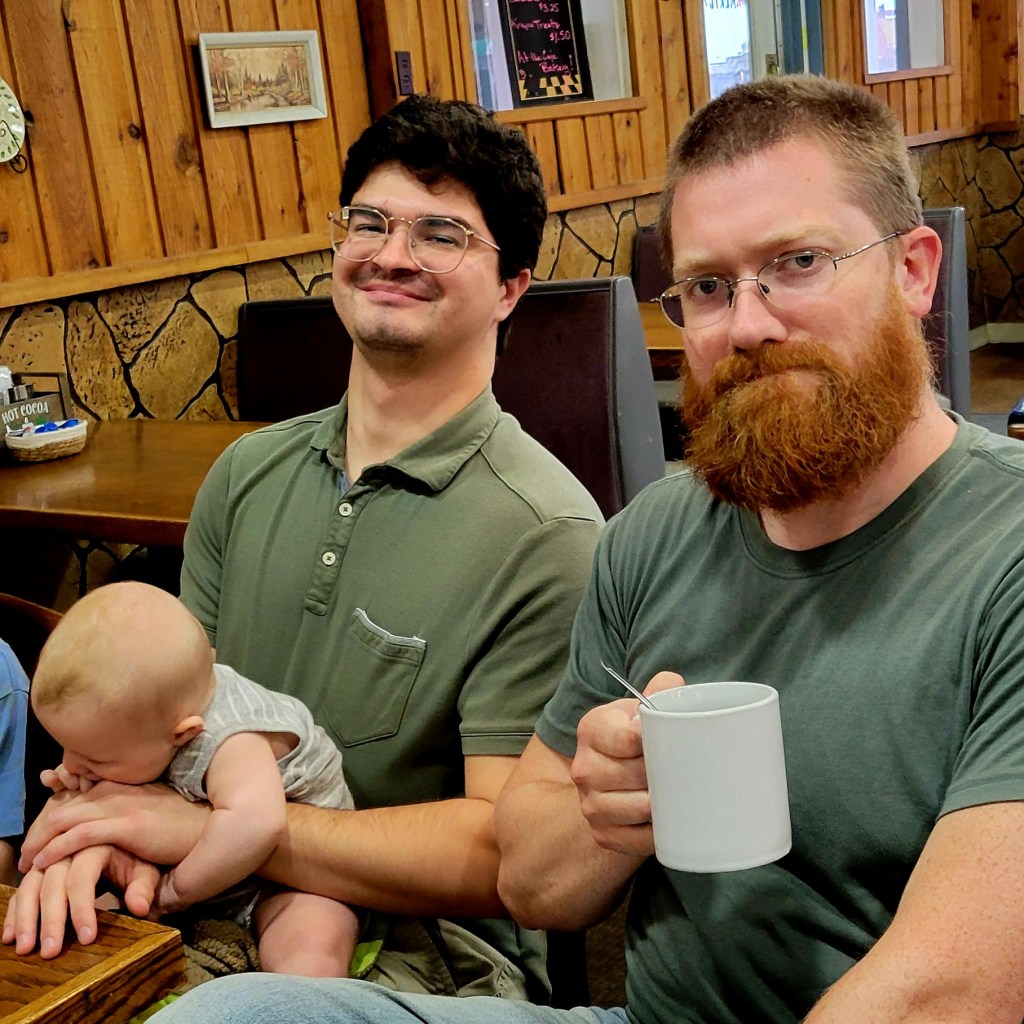
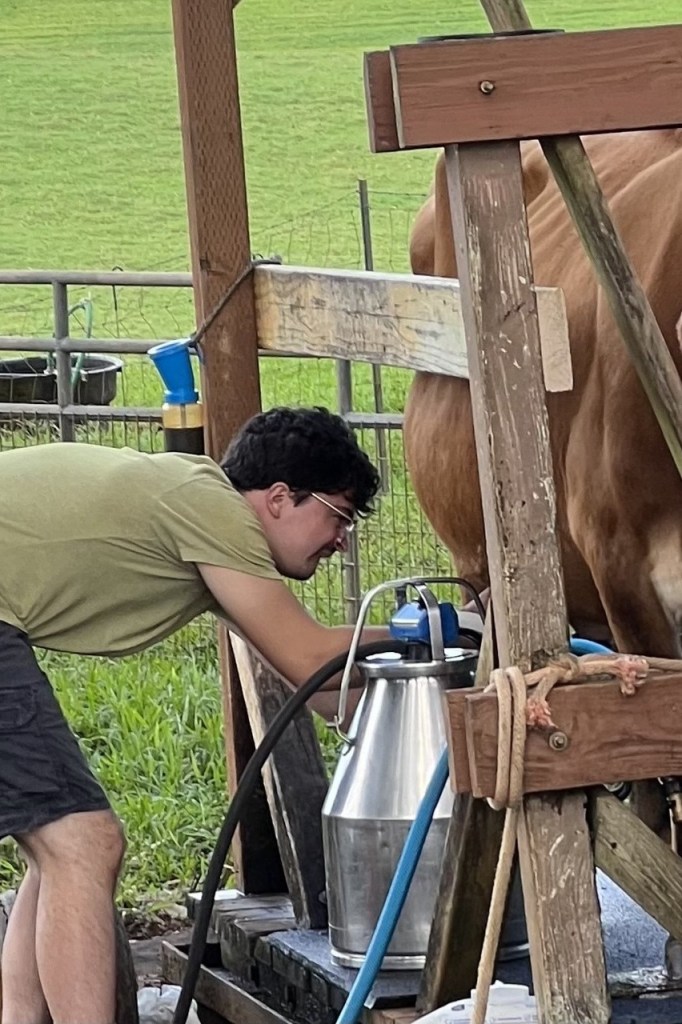
Isaac Dragomir serves The Boniface Group by helping out with editing, the website, and other odds and ends here and there. Hailing from the Prairie State, he has worked in Illinois, Wisconsin, and Hawaii as a caregiver, a school-bus driver, a teacher, and a tree-service crew member. But his favorite job so far has been milking cows. When Isaac isn’t quoting print jobs, he enjoys singing at the piano from his TLH; reading Luther, Walther, and history; solving a math problem; and gathering with family and friends around a board game, jigsaw puzzle, or fire pit.
The Axehead Circular, Episode 10 – Where Two or Three Are Gathered: Churchgoing in Extremis

A reading of our recent post by the same name and the soft relaunch of The Axehead Circular podcast.
Welcome back, boys.
Continue reading “The Axehead Circular, Episode 10 – Where Two or Three Are Gathered: Churchgoing in Extremis”The Axehead Circular, Episode 9 – SPECIAL: “Matins and Vespers in the Life of the Church”
A special episode of The Axehead Circular featuring a reading of “Matins and Vespers in the Life of the Church,” by the Rev. Charles L. McClean, pastor of Our Saviour Lutheran Church in Baltimore. A link to a PDF of this article can be found in the show notes.
Continue reading “The Axehead Circular, Episode 9 – SPECIAL: “Matins and Vespers in the Life of the Church””The Axehead Circular, Episode 8 – Daily Office

“Let all the faithful, whether men or women, when early in the morning they rise from their sleep and before they undertake any tasks, wash their hands and pray to God; and so they may go to their duties. But if any instruction in God’s word is held that day, everyone ought to attend it willingly, recollecting that he will hear God speaking through the instructor and that prayer in the church enables him to avoid the day’s evil; any godly man ought to count it a great loss if he does not attend the place of instruction, especially if he can read. . . . But if on any day there is no instruction, let everyone at home take the Bible and read sufficiently in passages that he finds profitable.” (Hippolytus of Rome, The Apostolic Tradition, Part IV.35)
Continue reading “The Axehead Circular, Episode 8 – Daily Office”The Axehead Circular, Episode 7 – The Consolation of Brethren
Today we learn what happens when the opening monologue doesn’t end, Trent doesn’t really have a topic, and the entire episode is a tangent. Not entirely, but close enough. Today we’re talking about the village again, but in a roundabout way. It’s called “the conversation and consolation of brethren,” and boy do we all need it. No, it isn’t a conference. It’s not not a conference. But if it’s only happening at conferences, something is very, very wrong. We discuss sharks in your living room, der ewige Porch, weaving, hymn-singing, and why you don’t need call documents to be a Christian, a friend, or a Christian friend.
Continue reading “The Axehead Circular, Episode 7 – The Consolation of Brethren”The Axehead Circular, Episode 6 – McGuffey, Part 1

In this episode Trent introduces William Holmes McGuffey and his famous readers. He talks about why the idea of the tabula rasa is false and pernicious, the biological reality of the American people, and some lessons about national identity from Ancient Israel. The discussion moves to the topic of the great shift in language instruction in the mid-twentieth century, why you might want to think twice about Dr. Seuss, and why Calvinism is a whipping boy for historians of American education. Toward the end of the episode, Trent points out several instances of how the virtues of McGuffey’s readers are often made evident in the mirror of his enemies’ critiques.
Continue reading “The Axehead Circular, Episode 6 – McGuffey, Part 1”The Axehead Circular, Episode 5 – Schedule, Part 1

In this episode Trent begins a survey of the weekly schedule used by St. Boniface. He discusses the significance of the week as a divine period of time, makes a digression on the worthlessness of modern American conservatism, and thinks out loud regarding the benefits of differentiated attendance and the variable shortening of the school day as a means of accommodating diverse academic abilities. As the episode wraps up, Trent makes the case for dialing down the academic rigor when teaching Literature and History during the elementary school years, not because these subjects are unimportant, but because the opposite is the case, and the readiness is all.
Continue reading “The Axehead Circular, Episode 5 – Schedule, Part 1”The Axehead Circular, Episode 4 – Calendar

In this episode Trent does a survey of the academic calendar used by St. Boniface Lutheran School and the St. Sarah Cottage School. He discusses the convention followed by the school for naming its academic terms, makes a digression on the propriety and rectitude of Thanksgiving as a civil Christian holiday, and gives the rationale for the liberal distribution of breaks throughout the school year. The episode wraps up with a discussion of the two testing weeks on the calendar, the reason for the variable lengths of the terms of the school year, why you should eat steak, and the rationale for tying “Spring Break” to Holy Week and Easter Week every year.
Continue reading “The Axehead Circular, Episode 4 – Calendar”The Axehead Circular, Episode 3 – Classical?

In this episode we answer the question “Are you a classical school?” In the show opener Trent maintains that it does, in fact, take a village to raise a child. The episode moves from there to a description of what the term “classical education” meant prior to the turn of the century and a discussion of how the recent attempt at redefinition by the New Classical Schooling movement is fraught with problems. In the final segment Trent describes nineteenth-century German Lutheran parochial schooling in America, suggests that this historical model provides a better pattern for Christian schooling than the New Classical Schooling model, and hints that another episode on the topic might be warranted.
Continue reading “The Axehead Circular, Episode 3 – Classical?”The Axehead Circular, Episode 2 – Architectonics

In this episode we consider the idea of architectonics, specifically how theology, not politics, is the true architectonic science. Trent discusses the meaning of “Evangelical Christianity” and comments on how Lutheranism is situated within this stream, and how a basic Evangelical confession is essential to the institutional character of St. Boniface. The show ends with a discussion of the school’s “Six Points,” the hoped-for relationship between the St. Boniface School and partner families, and the importance of being equally yoked.
Continue reading “The Axehead Circular, Episode 2 – Architectonics”The Axehead Circular, Episode 1 – Introduction
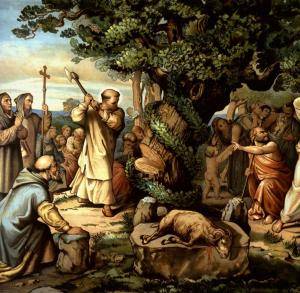
In this episode Trent Demarest introduces himself, The Boniface Group, St. Boniface Lutheran School of Western Idaho, and the St. Sarah Cottage School. He also gives a brief summary of the rationale behind the names for these organizations, discussing St. Boniface of Mainz, the so-called “Apostle to the Germans,” as well as St. Sarah, the wife of the patriarch Abraham.
Continue reading “The Axehead Circular, Episode 1 – Introduction”How It Started

It was the Feast of St. Michael and All Angels, several years ago. At the time my family and I were blessed to be members of a Lutheran congregation that still observed this holiday— historically dear and precious to Lutheran Christians— with an evening communion service.
Continue reading “How It Started”
