
[Access a PDF of this essay here.]
Theses on UNITY in the FAITH.[1]
Herr Prof. Franz Pieper.
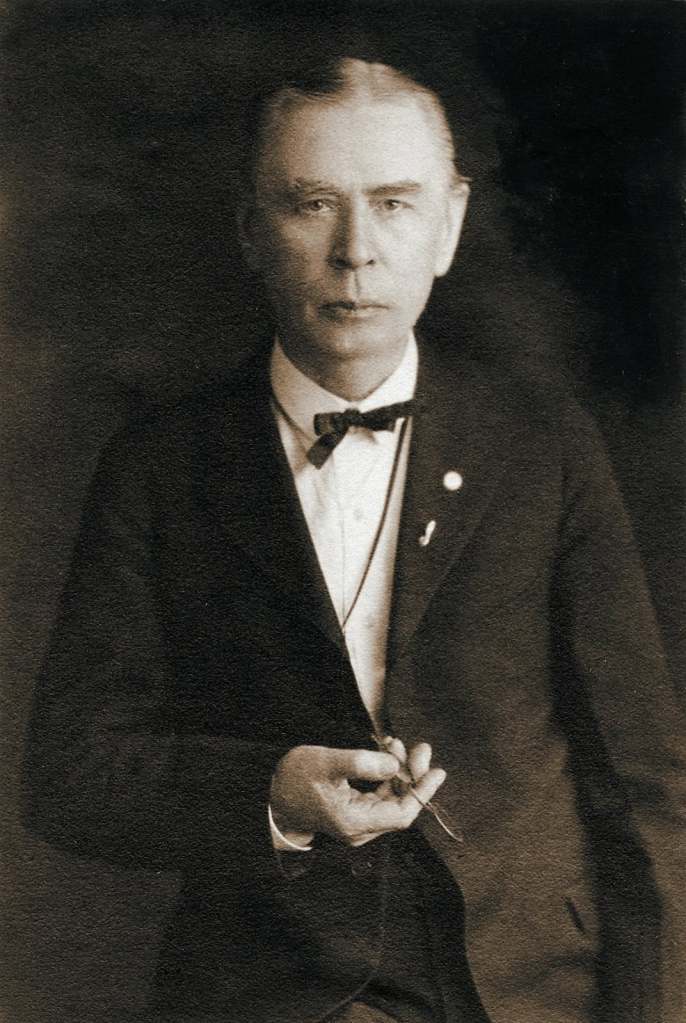
Dr. Pieper’s introductory comments:
It is generally agreed that there should be unity in the Christian Church. Everyone complains about the divisions in the Church. In all ages, and especially more recently, there have been energetic efforts to effect unity. We would be happy about this effort and would count our day as opportune for it if it were not for the fact that a closer look shows that most efforts towards unity are made in total ignorance regarding the nature of Christian unity. In this matter the devil has succeeded in effecting widespread confusion. Man looks for every kind of unity except the correct one which God desires. For that reason, man’s efforts fail and those who seek genuine unity are labelled enemies of all unity while those who destroy true unity are praised as promoters of it.
By God’s grace we know the correct, Christian, God-pleasing unity, unity in the faith. The following theses are presented to remind us of it and to encourage us in its preservation. The theses are as follows:
I.
Unity in the faith is agreement in all articles of Christian doctrine as revealed in Holy Scripture.
II.
This unity in the faith is possible because all articles of Christian doctrine are clearly revealed in Holy Scripture.
III.
This unity in the faith is desired by God because God both commands the acceptance in faith of His entire revelation and stoutly forbids every deviation therefrom.
IV.
The necessary outward testimony of unity in the faith consists in this: that those who stand in the unity of faith profess each other to be brethren in the faith.
V.
Those who stand in the unity of faith, recognizing this unity as a glorious blessing of God’s grace, should diligently seek to nurture and preserve it.
Thesis I.
We understand unity in the faith to be agreement in all articles of Christian doctrine which are revealed in Holy Scripture.
Thesis I expresses what we Lutherans understand under the concept of God-pleasing unity of faith. The detailed Scriptural support of this definition as the correct one will be given later (especially Thesis III).
It is to be noted that Thesis I does not answer the question regarding the bare minimum of God’s revealed truth that is necessary for a person to come to saving faith and to be sustained therein. We Lutherans agree that there are true Christians, children of God, also in heterodox fellowships such as the Reformed church, the Reformed sects, and the Romish church, which do not teach all articles of the revealed doctrine in conformity with the Word of God. These — the children of God — are one with us in the actual foundation of faith, namely, the article on justification. Together with us they believe that they are justified and saved alone by grace for Christ’s sake. Without this faith no one can be a Christian. Therefore, even God’s children under the papacy have this faith. The papacy as such not only rejects the article of justification but also specifically curses this foundation on which every true Christian stands and thereby reveals itself as the Antichrist. But as Luther frequently tells us, also in the papacy, e.g., the text of the Gospels and Epistles is still being read. When some poor soul there hears that Word of Scripture: “God so loved the world, that He gave His only begotten Son, that whosoever believeth in Him should not perish, but have everlasting life,” — then he, through the working of the Holy Ghost, accepts this word from God, despite the blasphemies of the papistical priest who praises Mary and the saints as saviors. We Lutherans, therefore, insist that the Lutheran church is the orthodox one because she has the complete Word of God clean and pure; but we do not declare the Lutheran church to be the alone-saving one. We do not claim that children of God are born only in the Lutheran church. Rather, we acknowledge that there are Christians where the essentials of the Word of God are to be found. As Luther comments on Gal. 1:2: “Where the Word and sacrament remain in their vital points, there also is a holy Church.” When someone, then, poses the question: “Is it not possible that also those have faith and are saved who err in one or the other articles of the doctrine revealed in God’s Word?” then we answer with an emphatic Yes! There are Christians who err out of weakness. There are such also in the orthodox church. Also in the Lutheran church there are weak, erring Christians, Christians who have not attained the correct understanding in all articles of Christian doctrine or who at least temporarily have erred in this or that article. We do not immediately declare such to be non-Christians, nor do we deal with them as such.
But this acknowledgment, that there are Christians who err in some articles of Christian doctrine, cannot induce us to define unity in the faith in any other way than has been done in Thesis I. We are speaking of unity in the faith as regards its nature according to God’s will. And that is agreement not only in several but in all articles of Christian doctrine.
It is in that way that the Lutheran church has conceived of God-desired unity in the faith. In Article VII of the Augsburg Confession, it defines the “true unity of the Christian Church” thus: “that there the Gospel be unanimously preached according to pure understanding and the holy Sacraments administered in accordance with the Gospel.”[2] It confesses in Article X of the Formula of Concord (Müller, p. 553): “We believe, teach, and confess also that no church should condemn another because one has fewer or more external ceremonies not commanded by God than the other, if otherwise unity in the doctrine and all articles of the same, as also in the right use of the holy sacraments, is maintained with one another.”[3] Here our church declares that it understands the correct unity as consisting in agreement “in the doctrine and all articles of the same,” not merely in some of the same. At the conclusion of Article XI of the Formula of Concord (Müller, pp. 724f.), our church asserts that it has a great desire and love for unity and strives to promote it, but it must be such a unity “by which His glory remains to God uninjured, nothing of the divine truth of the Holy Gospel is surrendered, no room is given to the least error.”[4]
This declaration concerning the true Christian unity was repeated by the Synodical Conference in the „Denkschrift“ [Memorial] of 1871. On page 26 of this „Denkschrift“, the words of Article X of the Formula of Concord are cited as a description of true unity.
In support of the fact that the Lutheran church understands the God-desired unity as agreement in all articles of Christian doctrine, this can also be said: Although the Lutheran church concedes that there are true Christians to be found among the heterodox, yet it has consistently refused to foster church-fellowship with the heterodox in order not to give a false idea regarding church unity as if agreement in all articles were not necessary, as if it were not necessary to accept the entirety of the Word of God.
That this is the Lutheran church’s understanding of unity is apparent also in the manner in which it deals with the erring and the weak within its own fellowship. It does not throw these overboard — that would be dreadful; but it also does not say: “It makes no difference if someone errs in this or that doctrine.” To the contrary, it deals with the weak as did the Apostle Paul with the Thessalonians according to 1 Thess. 3:10: with all patience and love it seeks to perfect that which is lacking in faith through instruction in God’s Word. Thus it always keeps in mind that the God-desired unity consists of agreement in all articles of Christian doctrine.
The Lutheran church ultimately distinguishes clearly between heterodox and orthodox churches. Such churches which do not teach all articles of Christian doctrine in harmony with the Word of God it calls contaminated or heterodox churches; on the other hand, those churches which hold to the correct doctrine in all articles it calls orthodox. Why does it hold to these designations which are so offensive to our time? Because it is convinced: it is God’s earnest will and command that in the Church His entire Word be accepted and hold sway. Where that is the case, the Church has the form it should have according to God’s will. Such a church, therefore, validly carries the name “orthodox” church. Where that is not the case, there is a great deficiency and serious sin, and such a fellowship in which this deficiency, this sin, is apparent, is properly called a heterodox or corrupted church or a sect. The stance towards God’s Word determines the character of a church fellowship. The Church is built upon the foundation of the apostles and prophets, that is, upon God’s revealed Word. Now, when a fellowship has completely abandoned this foundation peculiar to the Church, it no longer confesses the essentials of the Word of God, with the result that in this fellowship, according to its confession, saving faith in Christ no longer can be effected. This fellowship is then a body standing outside the Church. Thus states, e.g., the Apology, that those who no longer confess the Holy Trinity are outside the Church of Christ. (Müller, p. 77.[5]) A fellowship which still holds to the chief articles of Christian doctrine but rejects some clearly revealed articles of doctrine, is a sect. On the other hand, a fellowship which accepts and confesses all articles of divine doctrine is an orthodox fellowship, a fellowship as it ought to be.
In our discussion of unity in the faith, we turn our critical attention to those who feel that some articles of Christian doctrine are not necessary to true church unity. This unionistic attitude is quite widespread in the Church, yes, one might say that it has become a devastating flood which has inundated almost everything. The Union as it is found in Prussia and other areas of Germany is built on this basic principle: that agreement in the articles which are in dispute between Lutherans and the Reformed are not essential to unity in the faith. The unionistic attitude extends far beyond the boundaries of the governmentally controlled Union. The entire modern theology is unionistic. It declares as an exaggeration of doctrinal unity the requirement that there be agreement in all articles. The Reformed sects in our country speak of “orthodox” teachers and fellowships and understand thereby those who accept some basic doctrines. e.g., the doctrine of inspiration, of the deity of Christ, of the necessity of conversion. They abandon other clear doctrines of the Word of God. The well-known „Evangelische Allianz“, which was organized in London in 1846, rests on this same principle. It does not require of its members agreement in all doctrines of the Word of God but is satisfied with these nine: 1. of the Trinity, 2. of original sin, 3. of the deity of Christ, 4. of justification by faith, 5. of the binding character of the two sacraments, 6. of the resurrection of the body, 7. of the Final Judgment, 8. of the eternal bliss of the righteous, 9. of the eternal damnation of the ungodly. — Among the church-bodies bearing the name Lutheran in America, it is especially the General Synod that does not require agreement in all articles of Christian doctrine. In fact, it requires acceptance of the Augsburg Confession only with respect to the “fundamental articles.” Unity in the doctrine is not at all the unity that one has to strive for, but rather unity in work, in ceremonies, and the like.
To be sure, one needs to make a distinction between the various articles of faith revealed in Holy Scripture. There are doctrines that every Christian must know and believe, without whose knowledge and acceptance saving faith cannot exist. On the other hand, there are doctrines which one, in weakness, may not know, yes, regarding which he may even harbor error, and yet remain a Christian. This distinction is very important in answering the question as to who can be a Christian. But that question has no place at this point. Here we are considering the nature of unity in the faith according to God’s will. Regarding that, God the Lord says that all doctrines revealed in God’s Word should be accepted by all. If we wanted to define the unity of faith other than as given in Thesis I, if we wanted to begin to make a choice between the various Scripture-revealed doctrines of faith, then we would have placed ourselves on a slippery slope on which there is no longer any stopping, then also all distinctions between fundamental and non-fundamental doctrines would no longer be of any help. One could no longer say who is one with us and who is not.
At this point the following particular questions were also discussed:
What is our position toward those who are true Christians within heterodox fellowships? Is it sufficient that we simply acknowledge the fact that there are Christians in such fellowships? Or should one not give expression to this conviction in our outward conduct? We conduct ourselves, it appears, toward the heterodox as toward the children of the world. —
We already distinguish between heterodox fellowships and the children of the world when we acknowledge that there can be true Christians among the former.
Furthermore: When we meet with the heterodox, we seek to instruct them. That is the valid striving for unity in the faith. However, we cannot practice church-fellowship with them. For thereby we would be approving their errors and partaking of the sins of others. The refusal of church-fellowship in that case would not show a lack of love. To the contrary, it is the highest demonstration of love to seek to convince the heterodox regarding their errors. Some will thus be gained. Love demonstrates itself in the refutation of the erring, not through indifference toward them; this needs to be noted. We dare not say: “We are unable to come to an agreement with regard to this or that article of faith, but we nevertheless wish to be Christian brethren.” — It is simply impossible to practice fellowship with the Christians in the sects because we do not know who the Christians are among the false believers; they are hidden from us. They present themselves to us not as Christians but as false believers. As long as one pulls in the same harness with a false believer, we cannot recognize him as a brother. — These are two different questions: 1. Who is a member of the invisible Church, that is, a true Christian? It is whoever believes on Jesus Christ from the heart. And: 2. Whom must I acknowledge as an orthodox Christian so that I can establish church-fellowship with him? Here I must determine that he, together with me, submits to the total Word of God. Only then can I recognize him as a brother in the faith.
We know, of course, that there are hypocrites also in the true visible church. However, we must view as Christians all members of the same, if they confess the Christian doctrine and lead a godly life. Love requires that. But love does not require that we declare as Christians all in the heterodox fellowships. They do not confess the true Christian doctrine. Love requires only the acknowledgment: There are Christians among you.
In an effort to justify the false unionism, some also point to the distinction between subjective and objective faith. It is claimed that both are not necessary. What is taught in God’s Word (objective faith) need not all be known and believed by an individual Christian for his own person (subjective faith); if only he were honestly and sincerely convinced in his conscience of that which he accepts, then he would be a Christian and a brother, and we would stand in unity of faith. — But if the question is asked which of these two aspects of faith is the important one in this connection, the subjective or the objective, — our answer is this: Both are important and cannot be separated. One is dealing with doctrines which are revealed in God’s Word (objective faith), and these need to be accepted not only outwardly with the understanding but by an inner act (subjective faith).
We must also be clear on whether the definition of the first thesis collides with the statements of our church. The “we” of the thesis, after all, encompasses our entire Lutheran church within itself. When we look at the confessional statements of our church, such as Augsburg Confession, Article VII, we find that what is necessary to true unity is confined to the Gospel and the sacraments. The dogmaticians are in agreement therewith. Quenstedt says, e.g., that, strictly speaking, doctrines of faith do not include the moral commandments, rules, narratives, etc. Our church, therefore, does not here speak of all doctrines but rather of the doctrines of the Gospel, of faith. Are all doctrines now meant in this thesis, also those which concern the Law? Then the concept in the thesis as to what should be enough for unity would not be entirely the same as in the Augustana. — It was declared: Also in the thesis, only the Gospel is meant. When we speak of “articles of the Christian doctrine,” we mean the revelation and preaching of Christ — Christus revelatus, Christus praedicatus. The Law does not come into consideration here. The foundation upon which the Christian Church is built is Christ, the Gospel. The Law certainly is not peculiar to the Christian Church, but it is common to all men. If a man would know the entire Law and also stand under the operation of the same, he still has nothing of that which makes a sinner into a Christian and a believing child of God. The Law does not make the Church; the Law also does not make the Church one. Only the Gospel does that. For that reason, the Law does not belong in a definition of Christian unity or unity in the faith.
Perhaps one interjects at this point: How is it with the Law? Is that left up to the discretion of men? Must we acknowledge as a brother in the faith someone who, e.g., rejects the Seventh Commandment but at the same time insists that he accepts the teachings of the Gospel? — The Law is clear to human reason and is acknowledged by human reason. In Scripture God has merely polished up the mirror of the Law. Therefore, to someone who rejects points of the Law we can properly say: How can you accept the teachings of the Gospel and belong to the Church when you do not even accept the Law which even simple reason understands? — Further, whoever, e.g., does not wish to accept the doctrines of sin, of the sinfulness of mankind, etc., which are law in themselves but are also confessed in our confessional writings, of such a one we would surely know that he cannot be one with us in faith. No one can accept the doctrine of Christ and confess it in full truth who, on the other hand, teaches: Basically, we do not need a Savior. The same is true with regard to other doctrines whose rejection is equivalent to a rejection of specific articles of the Gospel. Thus are, e.g., the Pelagians condemned by the Lutheran church, and brotherhood of faith with them is rejected. Therefore, we must require of everyone who insists on being one with us in faith that he submit to every word of God. After all, that is the foundation for the Christian faith: that one be obedient to God’s Word. That includes also the Law since it is clearly and unequivocally revealed in Scripture. When someone refuses to accept the validity of the clear, spoken will of God, then we must tell him that he does not yet stand with us on the same ground. Therefore, while the Law does not belong to faith nor, for that reason, in the definition of faith, yet is the acceptance of the Law a necessary prerequisite to unity in the faith. When one says: We believe the Law, then the word believe is taken in an entirely different sense than when one speaks of Christian faith. The expression “articles of faith” designates a very specific concept: the doctrines of the Gospel in distinction to the Law.
Thus far it has been stressed that we require agreement in all articles of the Christian doctrine. But at the same time we dare not reckon more in the essence of the unity in the faith than agreement in all articles of the doctrine. In that which is not a clear doctrine of the Word of God, we must allow liberty; for that, we dare not demand agreement.
We dare not require agreement in so-called theological problems, that is, in questions which are not answered in God’s Word. That would be demanding too much. This is already apparent in the concept of faith. Faith takes place only over against divine revelation. Where there is no Word of God, there can be no faith.
In addition, we dare not require — as belonging to the essence of unity in the faith — agreement in divine-service practices, ceremonies, ecclesiastical organization, and similar things. Why? Because they are left open in God’s Word. What we are to preach is given us in God’s Word: the entire Word of God, and that clean and clear. But the place, time, and form of a divine service lies within the freedom of every Christian congregation. Whether one, two, or three hymns are sung before the sermon; whether we place the absolution at the beginning of the service or let it follow the sermon; whether it is a so-called liturgical service or not; whether the pastor sings or speaks the liturgy — concerning these, no prescriptions are found in God’s Word. Each congregation can determine those matters as seems fitting to it. Uniformity in ceremonies must not be considered a factor when we are considering unity in the faith. In general, all that belongs to the so-called adiaphora, which God’s Word has neither commanded nor forbidden, must not be reckoned as belonging to the essence of unity in the faith. Uniformity in ceremonies is indeed not a matter of indifference under all circumstances and in every case; but it is completely indifferent with respect to complete unity in the faith. All congregations which have the same doctrine are one, even though they have different ceremonies. Conversely, congregations may be outwardly as identical as soldiers in uniform; if they are not one in the faith, in the doctrine, then all its unity is an illusion. In short: Uniformity in ceremonies and organization is not indifferent under all circumstances and in every case, but completely indifferent with reference to the essence of unity in the faith.
Thus says our confession also (Augsburg Confession, Article VII): “This is enough to the true unity of the Christian Church: that the Gospel be preached with one accord according to pure understanding and the sacraments be administered in accordance with the divine Word. And it is not necessary to the true unity of the Christian Church that uniform ceremonies, instituted by men, be observed everywhere.”[6]
To be sure, our confession also gives expression to the thought that uniformity in certain ceremonies is not completely indifferent in other situations; if we have, e.g., certain ceremonies in common with the old church, we are in some measure outwardly indicating our continuity with that church. However, our Confession adds that this uniformity in outward procedures cannot come into consideration when we are dealing with the essence of Christian unity. It says in the Apology (Art. VII and VIII. Müller, p. 159): “Although it also pleases us well that, for the sake of unity and good order [propter tranquillitatem], universal ceremonies be uniformly observed, just as also in the churches we indeed also retain the Mass, Sunday’s festival, and the other high festivals. And we gratefully embrace all good, profitable human ordinances, especially those which serve for a fine outward discipline of the youth and the people. But here the question is not about, Whether human ordinances are to be observed for the sake of outward discipline, for the sake of peace [propter tranquillitatem aut corporalem utilitatem]? It is very much another question, namely, whether observing such human ordinances is divine service [Gottesdienst] by which one appeases God, and that without such ordinances no one may be justified before God” (and to this we add by analogy: whether churches may not be one without such ordinances). “This is the principal question. When this is finally and ultimately answered, then it can afterwards be clearly judged whether that is what it means to be one or of one mind with the Church, when we everywhere uniformly observe such ordinances.”[7]
We might add that it sometimes happens, as Christians move from one congregation to another, that they do not feel at home because of different ceremonies. It is desirable for the sake of such weak people that the ceremonies in the same fellowship should be as uniform as possible. At the same time, such people should be instructed and shown that doctrine determines Christian fellowship and not ceremonies, organizations, or even synods. It can become dangerous when we fail to direct people away from adiaphora and to God’s Word. This should be the case: We should not feel at home in another church when we find familiar ceremonies but a different doctrine. On the other hand: Where we find other ceremonies but the same doctrine and the pure Gospel, there we should feel at home, for there is Christ. Where God’s Word is preached purely and cleanly, there we hear Christ’s voice.
We understand unity in the faith to be actual agreement in doctrine. There are people, also so-called Lutherans, who speak thus: We agree with you in everything regarding which you require agreement. We accept the Augustana not only in general or “in essence,” not only the “chief articles,” but we accept without reservation the entire Confessions of the Lutheran church. So why do you deny us church recognition? Do you demand more than that? Answer: We require no more than agreement in all articles of doctrine. But we do require agreement, not merely words which say that there is agreement; we require agreement itself. When we note that you speak of agreement in the truth but do not have the same, — then we cannot view you as people who stand in the God-desired unity of faith simply on the basis of your word while the reality itself is missing. Your words regarding unity are false when you tolerate people among you who believe and teach otherwise than is taught in God’s Word and is acknowledged in the Confession of the Church. First be concerned that what you say is the truth; only then are we truly one. —
When in the thesis it states: “By ‘unity in the faith’ we understand agreement in all articles of Christian doctrine revealed in Holy Scripture,” we are not speaking of a knowledge of the entire Holy Scripture. It is possible that someone might know only the New Testament and yet be completely one with us in the faith. Why? Because all articles of Christian doctrine are revealed in the New Testament. Therefore, he stands with us in true unity of faith even though he has taken his knowledge of Christian doctrine only from the New Testament. He would have the right picture of God who saves us in Christ Jesus. We must therefore distinguish between unity in the faith and the extent of one’s knowledge of the Word of God. A person can be one with us in faith and yet lack knowledge of much that is in God’s Word. Many doctrines are revealed in hundreds of passages; but a person is already in agreement with us if he has drawn the correct doctrine from only one of the pertinent passages. — One may also differ with us in his exposition [Auslegung] of this or that particular passage; if his exposition is otherwise in agreement with the faith, he can be one with us. —
It is an entirely different matter when someone knows a portion of Holy Scripture but at the same time denies it. When someone, e.g., denies that Balaam’s ass spoke, he thereby shows that he overthrows the authority of Scripture and does not accept any article of the Christian faith because it is revealed in Scripture. There can be here no talk of unity in the faith with Christendom.
Does the word agreement in the thesis include that confidence without which faith is not true faith? Would there be agreement simply by approval (assensus)? Answer: When we here speak of the unity in the faith which is further defined as the “agreement in all articles of Christian doctrine,” we understand by “faith” the Holy Ghost–wrought faith. This always includes also confidence within itself. There can never be just one part of the Holy Ghost–wrought subjective faith. He who possesses knowledge also possesses assent and confidence. The division of faith into notitia, assensus, and fiducia is only an abstract one. In practice, one part does not stand alone. Thus in Thesis I fiducia is also included. When there is merely an outward, historical knowledge of the articles of Christian doctrine, there can be neither Christian faith nor agreement in the same with others.
Thesis II.
This unity in the faith is possible because all articles of Christian doctrine are clearly revealed in Holy Scripture.
It is an amazing phenomenon within Christendom that the possibility of agreement in all articles of doctrine is being questioned. In connection with the efforts toward union, which at the present time are again being urged, it is said openly that agreement and union on the basis of doctrine are impossible. With reference to doctrine, it is claimed that agreement can be required only in certain main articles; aside from that, we must be content with a so-called organic unity, a unity in church organization, in the form of church services, etc. It is claimed that we are pursuing a will-of-the-wisp in requiring unity in doctrine. To be sure, not all speak so openly. But the basic thought that a unity in doctrine is impossible underlies all efforts at union which have unity of faith as their goal but nevertheless want to unite only in externals.
We maintain the opposite. Yes, if we were dealing with agreement in obscure human opinions or in difficult philosophical problems, then unity would be impossible. But we are dealing here with agreement in the articles of doctrine which have been revealed by God Himself in Holy Scripture. And how is this doctrine revealed? Not obscurely and unintelligibly. It does not require a great deal of human cunning to understand the revealed truth. Here, only the simple faith in God’s Word is required. He who believes the Word of Scripture has the truth. It is not the case that in God’s Word only obscure hints, only suggestions regarding the truths of faith are to be found, and that men with their ingenuity and craft need to construct the doctrines of faith themselves. It is not the case that God the Lord in His revelation says only A and would have left it to the ingenuity of men to say B and C and thus to find the alphabet of Christian doctrine themselves. No, all articles of Christian doctrine stand revealed in Scripture in clear words. In Holy Scripture, God has spelled out the entire ABC’s of Christian doctrine. All that is required is the acceptance of what has been revealed, a repeating of what has been spelled out, a simple faith. And Holy Scripture is clear and plain for all Christians, not only for pastors. All articles of doctrine are revealed in such passages of Scripture to which the learned and the unlearned have equal access. That is most certainly true, as certain as Scripture says of itself that it is a light for all Christians (2 Pet. 1:19), a Word which makes wise the simple (Ps. 19:7),[8] which even children can understand (2 Tim. 3:15), and as certainly as all Christians, by this Word of Scripture, are to prove all doctrine offered to them. God’s purpose in Scripture is not to offer or to present riddles, but to reveal salvation to all mankind. He who denies the possibility of unity in the faith must also deny that Holy Scripture is clear. As certainly as the entire Christian faith is clearly revealed in Scripture, so sure is the possibility of unity in the faith.
But unity in the faith is not only possible, but it is also actual. God has made it possible through His clear and, at the same time, powerful Word. One example of this is the Lutheran church. We Lutherans — this we know for sure — have the entire doctrine of salvation as revealed in Holy Scripture and are therefore one in faith. In this unity stand not only the pastors but also the so-called laity. This is most certain, as certain as they also, e.g., know and believe our Small Catechism.
Such talk, to be sure, is offensive in our day. Only “opinions” regarding Christian doctrine are to be allowed. No Christian fellowship is supposed to say that it assuredly has the entire, full truth. The Christian truth should be divided among the various fellowships: one has more, another has less; but none may glory in its possession of the entire, full truth. Yes, doubt regarding the truth, a heathenish search for truth has become fashionable and masquerades as a Christian virtue. It actually happens that, even in groups that bear the name “Lutheran,” people ridicule “pure doctrine.”[9] We are charged with a tendency toward papal infallibility when we claim that we have the truth in all articles of Christian doctrine and therefore stand in full unity of faith. But this charge is based on either great ignorance or malice. The pope claims he in his own person is infallible independent of, alongside, yes, in opposition to God’s Word. We, however, concede that we personally can err, yes, that we, when it depends on us, can only err in spiritual matters. But in doctrine we do not err but rather are infallible insofar as and because we stand on God’s Word as it reads. We speak as God’s Word speaks. In all doctrines we need only to repeat after, what God’s Word so clearly for us spells out before; that is our entire art. The Lutheran church claims to be in possession of the sure, entire truth only for the reason that it accepts the sure, entire Word of God as it reads.
That our sinful nature continues to cling to us does not militate against what has been said. Despite the fact that we are still sinners, our doctrine is correct and is godly truth. Our teaching consists precisely in this: that we repeat what God has said. That which is revealed in Scripture does not go through some sort of process involving additions by us so that what is taught by us is half divine and half human, half true and half false. Rather, when things are right with the preachers by God’s grace, they are simply the mouth of God. They do not present their own ideas but rather the thoughts of God clearly revealed in Scripture. A preacher should be able to say: “What I have told you, that is divine truth.” Luther reminds us that he who cannot say that should let preaching alone. We dare not confuse fallibility in life with fallibility in doctrine. The latter does not follow from the former, for the clarity of Holy Scripture has been taken out of our hands. All uncertainty and all error in matters of Christian doctrine take place because the clear Word of God is laid aside and because of an unwillingness to repeat what the Word of God says. One follows the traditions of the Church or human reason or his preconceived notions and thus allows himself to be turned aside from divine revelation in Scripture. It is a great self-deception when one says: “From Scripture one certainly cannot derive all articles of Christian doctrine.” The problem lies not in God’s Word but rather in man who turns against God’s Word. The false teachers simply do not want to believe what God’s Word says. From their unbelief in the Word of God flow their error and their uncertainty. Their position is identified by the saying: “The message hear I indeed; but to me the faith is lacking.”[10]
God’s Word is so constituted that, out of the same, one not only can derive but must derive the right doctrine, provided he remain with the Word. If someone wishes to err, he first of all has to discard the clear Word of Scripture and becloud its meaning with human opinion. But that faith that considers Holy Scripture a light that clearly and distinctly reveals all articles of the faith has unfortunately largely been lost in Christendom.
Viewed another way, it might be said: He who follows Holy Scripture cannot err; he cannot escape finding the right path. That is true because the doctrine of Scripture is one. It never occurs that one doctrine of Scripture contradicts another. No truth of Scripture has ever experienced change. False scholarship insists that it has discovered that Scripture contains various concepts, various directions, which come into conflict with one another. That is a lie of the devil. For if that were true, then were one unity in the faith impossible. But such two- or mani-fold contradiction is not in Scripture. He who heeds Paul also heeds Peter and John; he gives heed to the Holy Ghost. He who heeds the Holy Ghost attains to unity in the faith. The minute we interject our own wisdom, the unity ceases. History corroborates this. As soon as scholarship [Wissenschaft] wants to establish theology, a babylonish confusion steps in place of the unity, so that one no longer understands another, yes, often not even oneself. A teacher talks this way one day and another way the next day. When all take the same position according to which they say: “Speak, Lord; for thy servant heareth,” and repeat, teach, believe, confess that which the Lord speaks — only then can we arrive at unity in faith and remain therein. God has been very good to us. He has given us His truth and has preserved us from false scholarship. For that reason we are one in the faith. —
To refute this thesis, one has appealed, e.g., to 1 Cor. 13:9: “Our knowledge is patchwork [Stückwerk], and our prophesying is patchwork.” One claims that we can never maintain that we have the truth; that here we should not forget Christian humility. Also cited is the “fact” that even the apostles did not always agree with one another. Also it is claimed that down through the centuries it has always been clear that agreement is not possible in Christendom.
The answers to these objections have already been given. In 1 Cor. 13:9ff., Paul is comparing knowledge in this world with knowledge in eternity; he is not distinguishing between having truth and not having truth. — And in the early church when differences arose, we do not hear them saying “No harm done! Outward union is after all the main thing; we can never hope to be one.” No, they met together and discussed until they became one.
Thesis III.
This unity in the faith is desired by God because God both commands acceptance in faith of His entire revelation and stoutly forbids every deviation therefrom.
There is no scarcity of those who insist that it is not in keeping with the will of God to press for full unity in the faith. Even within the Lutheran church, conflict regarding some doctrines and the absence of oneness have been pictured as something good, namely, as a mark of an active spiritual life. The attitude is quite general in our day that various lines of direction in the Church are warranted. Quite recently this view was enunciated by a publication („Kelle und Schwert“ [Trowel and Sword]) within the “General Council.” Among other things it stated: “We contend against no other denomination as such.” And: “We see in the existing variety of churches on earth the incomprehensible wisdom, but also the gracious kindness, of God who takes into consideration not only the personal traits of individuals but also the national characteristics of entire nations in His plan of development, in His will for redemption, in the work of His offer of salvation.” That the Reformed and papists are found alongside Lutherans — for the former are specifically included under “other denominations” —, that, accordingly, there is disunity in doctrine; yes, even worse, that the Reformed and papists deviate frequently from the truth — all this is ascribed to the “incomprehensible wisdom of God”!
When we look at Christendom, we see very little effort to foster unity of faith. Let one read, e.g., reports regarding German church meetings. It is conceded that there is no agreement in doctrine. Moreover, there is no serious effort to reach the goal of becoming one in doctrine. The conferences deal mainly with external matters, seldom with doctrine. And even then the attitude is not that oneness in doctrine must be achieved and that all doctrine contrary to the Word of God must be eliminated.
But it is God’s will that all Christians should be one in faith, one in such a way that they are in agreement regarding all articles of Christian faith as stated in Thesis I. It is completely incomprehensible that people who profess to believe Holy Scripture can speak of various and equally valid directions in the Church. We could speak of the equal validity of various lines of direction only if God allowed us to depart from His Word and either offered the preachers dispensation from preaching His Word purely and plainly or at least freed the hearers from believing everything that was preached to them from God’s Word. But neither one is the case. Rather, every preacher should preach only God’s Word without any admixture of human opinion. Jeremiah 23:28, “The prophet who has a dream, let him tell his dream; and he in whom is My word spoken to him, let him tell My word truly: what is the chaff to the corn? so are My words, saith the Lord.” 1 Pet. 4:11 speaks of that which shall be proclaimed in the Church of God: “If any man speak, let him speak as the oracles of God.” Every preacher shall proclaim not merely portions of God’s Word but all of it, as Paul says of himself in Acts 20:27, “For I have not shunned to declare unto you all the counsel of God.” The preacher shall not add to or subtract from the Word which God has given him (Deut. 12:32; Rev. 22:18–19). Matt. 5:19 has this earnest warning: “Whosoever therefore shall break one of these least commandments, and shall teach men so, he shall be called the least in the kingdom of heaven.” As for the hearers, they are commanded to accept the entire preached and read Word of God. Jesus spoke reprovingly to the Emmaus disciples (Luke 24:25), “O fools, and slow of heart to believe all that the prophets have spoken!” When preachers take it upon themselves to deviate from the Word of God, then the hearers should depart from them. Romans 16:17, “I beseech you, brethren, mark them which cause divisions and offences contrary to the doctrine which ye have learned; and avoid them.” To repeat, it is truly inconceivable that people who profess to believe Holy Scripture can still talk about a variety of equally valid directions in the Church. Only one course is admissible according to Scripture, namely, that which accepts all of God’s Word without adding to it or subtracting from it. As surely as God wants in the Church only the one doctrine revealed by Him, just so surely does He want this one “direction” in the Church. That there are “denominations” stems not from God’s incomprehensible wisdom but from sin, from the folly of man, from the unbelief that does not want to accept God’s Word. That there are Reformed and papists is not by God’s will nor by His doing, but rather is permitted by God as He permits other sins. The character of the church which God desires is agreement in all articles of Christian doctrine, true acceptance thereof. As surely as it is God’s will that people accept His entire Word and as surely as the Lutheran church accepts that entire Word, so sure it is that all people should be Lutherans. For example, when we on the basis of God’s Word say, “God alone works conversion,” it is not God’s will that the Ohioans at the same time say that in a certain respect conversion and salvation depend also on human beings and not alone on God. Again, when we on the basis of Scripture say of the Lord’s Supper, “It is the true body and blood of Christ,” it is not the will of God that the Reformed at the same time insist that it is not Christ’s body and blood but that the body and blood of Christ are merely symbolized by the bread and wine.
God specifically commands oneness of doctrine which He presents to faith. 1 Cor. 1:10, “I beseech you, brethren, by the name of our Lord Jesus Christ, that ye all speak the same thing, and that there be no divisions among you; but that ye be perfectly joined together in the same mind and in the same judgment.” This states as clearly as possible that according to God’s will all Christians should be fully one in faith. Among Christians, varying opinions should not be held and presented; rather, all should speak the same thing in the same mind and with the same meaning. Among Christians, scattered as they are throughout the world, there can and must be variety. They vary in their languages and customs. Their church services, as far as outward matters are concerned, may be completely different. But in one thing there should be no diversity, but rather total agreement: All Christians in the entire world should be one in doctrine.
Eph. 4:3–6, “Endeavouring to keep the unity of the Spirit in the bond of peace. There is one body, and one Spirit, even as ye are called in one hope of your calling; one Lord, one faith, one baptism, one God and Father of all, who is above all, and through all, and in you all.” The apostle here admonishes that the Spirit-wrought unity should be preserved. He bases his admonition on a reference to the fundamental items which constitute the unity. Through the working of the Holy Spirit, Christians form one spiritual body; just as they have one hope of eternal life, they have also one Lord, one faith, one baptism. The God-desired spiritual fellowship is therefore only present among Christians when they all have the same one faith, the same Word and sacrament.
Eph. 4:13-14, “Till we all come in the unity of the faith, and of the knowledge of the Son of God, unto a perfect man, unto the measure of the stature of the fulness of Christ: that we henceforth be no more children, tossed to and fro, and carried about with every wind of doctrine, by the sleight of men, and cunning craftiness, whereby they lie in wait to deceive.” According to the context, the apostle here indicates what should be achieved among Christians, and states that the ascended Lord has given to His Church apostles, prophets, evangelists, pastors and teachers. The result should be that all Christians have the same faith and understanding, not allowing themselves to be moved like children by every wind of false doctrine but rather to stand firm as men on one and the same revealed doctrine.
Another passage worth noting is 1 Thess. 3:10, “Night and day praying exceedingly that we might see your face, and might perfect that which is lacking in your faith.” Paul had been in Thessalonica only briefly. Persecutions by the Jews had forced him to leave the city. As a result, a lack of understanding on the part of the Thessalonians soon became apparent. They did not have a correct grasp of many articles of the Christian faith. Now that the apostle writes to them, he does not say, “It makes little difference whether you have the correct understanding in all doctrinal matters or whether you err in this or that article.” No, the apostle prays that God may give him the opportunity through further personal instruction to supply what was lacking in the faith of the Thessalonians.
In John 8:31 the Lord says, “If ye continue in My word, then are ye My disciples indeed.” John 10:27, “My sheep hear My voice, and I know them, and they follow Me.” Verse 5, “And a stranger will they not follow, but will flee from him: for they know not the voice of strangers.” In these and similar passages the Lord states what should be the case among disciples of Christ, namely, that they adhere to Christ’s words, they hear Christ’s voice so exclusively that they flee from a stranger and turn away from everything that is not Christ’s voice. Thereby it is declared that in Christendom there should be only one doctrine and one faith.
To be sure, 1 Cor. 11:19 states, “For there must be also heresies [αἱρέσεις (hairéseis), that is, factions, parties] among you.” But the apostle does not continue, “That is all right,” or, “Therefore tolerate the false teachers.” Instead, he adds, “that they which are approved may be made manifest among you.” In His just judgment God allows αἱρέσεις to arise. He does so not in order that there might be different directions in the Church but rather that it might become apparent who holds to the right direction established by God’s Word. — “The earth has room for all” — that is true and holds true also for the Church in this respect: that the Church does not have the assignment to remove anyone from the earth, to take his life. But the Church does not have “room for all.” Instead, God commands, “Put away from among yourselves that wicked person” (1 Cor. 5:13). Regarding doctrine, the Word is “A man that is an heretick after the first and second admonition reject” (Titus 3:10), “Avoid them” (Romans 16:17).
The will of God, with regard to the unity of faith, can be noted especially also in the high priestly prayer of Christ, John 17:11, “Holy Father, keep through Thine own name those whom Thou hast given Me, that they may be one, as We are.” Verse 17, “Sanctify them through Thy truth: Thy word is truth.” Verses 20–23, “Neither pray I for these alone, but for them also which shall believe on Me through their word; that they all may be one; as Thou, Father, art in Me, and I in Thee, that they also may be one in Us: that the world may believe that Thou hast sent Me. And the glory which Thou gavest Me I have given them; that they may be one, even as We are one: I in them, and Thou in Me, that they may be made perfect in one.” Our Savior here prays for the complete oneness of his disciples, but it is a unity which has its basis in God’s name, God’s truth, God’s Word, etc., in other words, for a complete unity of faith.
In the presentation thus far, it has been fully demonstrated that the unity defined in Thesis I is that which is desired by God. Therefore, it is amazing that the unionists, in support of their wrong position, cite the key passage which deals with unity of faith, Eph. 4:3ff. They say, “After all, the passage says, ‘endeavouring to keep the unity of the Spirit in the bond of peace.’ Therefore, it is God’s will that we should not contend so strenuously regarding doctrine but rather should promote peace. You ought to extend the hand of brotherhood in love also to those with whom you do not agree.” To be sure, there is a bond of peace which encircles the Christian Church, and that is love which should always be active in Christendom. But active in what way? In such a manner that “in the bond of peace” various people are bound together outwardly? No, rather love should be active in such a way that we seek to “keep the unity of the Spirit.” If this passage were to support the unionists, it would necessarily read, “Endeavouring to keep the multiplicity of the Spirit.”
God’s Word also says that we should not allow ourselves to be lured away in any manner from the true unity. That is clear from a comparison of Rom. 10:1–2 with Rom. 11:28. It is often said, “Why do you not wish, in love, to be one with these people? You can see that these people are very earnest; they are truly zealous about God and Christ. Is it not a shame to withhold the hand of fellowship because they err in this or that article?” In Rom. 10 Paul says regarding the Jews, “Brethren, my heart’s desire and prayer to God for Israel is, that they might be saved. For I bear them record that they have a zeal of God,” and he then adds, “but not according to knowledge.” The better Jews sincerely believed that they had the truth. But does Paul for that reason extend to them the hand of fellowship? No, for even though he loves them dearly and prays for them earnestly, he yet states in chapter 11, “as concerning the Gospel, they are enemies.”
In connection with Thesis III there are still several objections presented by the opponents of true unity which need clarification.
The unionists say that love should be allowed to come into play, but that this can happen only in the absence of a rigid approach to all articles of doctrine. We reply: What a strange sort of love that would be which places us in glaring opposition to God’s Word! It is God’s will that we believe and accept all that stands written and that we do not disregard the smallest commandment. However, this “love” which is urged upon us would cause us to depart from God’s Word and therefore would involve a disregard for the majesty of God. That is a caricature of love. As a matter of fact, the love-filled unionists basically love neither God nor man. They do not love God, for the Lord says, John 14:23, “If a man love Me, he will keep My words.” They do not love their neighbor, for error in faith and departure from God’s Word is never a matter of indifference; it is always dangerous to the soul. Peculiar indeed is the unionistic methodology which says, “This or that undoubtedly is taught in Scripture, but it is not necessary to hold to it so closely.” This is thoroughly dangerous and causes the entire Word of God to totter.
The unionists cite 1 Cor. 3:12–15, “If any man build upon this foundation gold, silver, precious stones, wood, hay, stubble; every man’s work shall be made manifest: for the day shall declare it, because it shall be revealed by fire; and the fire shall try every man’s work of what sort it is. If any man’s work abide which he hath built thereupon, he shall receive a reward. If any man’s work shall be burned, he shall suffer loss: but he himself shall be saved; yet so as by fire.” It is true that the apostle here states that in the Church some build with the wood, hay, and stubble of erring human opinions on the correct foundation with the result that the builders may yet be saved. But he does not say that wood, hay, and stubble are to be permitted in the Church or are desired by God. To the contrary, it is stated that wood, hay, and stubble have no permanence but rather will be consumed by the fire. All that can be proved from this text is that one may be saved despite his erring opinions as long as he holds to the foundation, Christ, and lets his own worthless work be consumed in the fire of tribulation.
The unionists call our attention to the passages which exhort us to bear with the weak, for example, Rom. 15:1, “We then that are strong ought to bear the infirmities of the weak.” It is certainly God’s will that we bear with the weak, also with those who are weak in doctrine. But this bearing with the weak means that they should not be cast aside in a loveless manner and be declared non-Christians. Rather, in love and patience they should be instructed out of God’s Word, but not in such a way that their error is explained either as the truth or as a matter of indifference. That would merely confuse further the already confused consciences. Let us heed the Scripture! In Scripture we are often encouraged to bear with the weak. But it is never said that we should tolerate those who err in doctrine. To the contrary, it states, “A little leaven leaveneth the whole lump.” Applied specifically to the erring fellowships, this means that they stand before us not as weak fellowships but rather as fellowships which err against the clear testimony of the truth and therefore have separated themselves from the true church.
Finally it is said that the requirement for agreement in all articles of doctrine cannot be according to God’s will since the splintering of the Church is the inescapable result of such a requirement. Our answer is that the outward splintering of the Church is certainly not the fault of those who, in accordance with God’s command, make the entire Word of God valid, but rather it is the fault of those who, contrary to God’s command, do not wish to accept this Word. The accusation that those who stress acceptance of all Scriptural doctrine are disturbers of the peace is just as unreasonable as is the case when our anarchists complain that those are disturbing the peace who do not allow them to transgress the law at their own discretion. In the Church of God the word is, “To the law and to the testimony,” that is, to the revealed Word of God. God’s Word is the law of the land for the Christian Church. And those are the authors of the divisions who do not allow the law of the land to have full sway but rather want to overthrow it at least in some articles. Whom does God’s Word call the disturbers of the peace? Not those who hold to the Word, but rather those who do not abide by the revealed doctrine. Rom. 16:17: “I beseech you, brethren, mark them which cause divisions and offences contrary to the doctrine which ye have learned.” Therefore, according to Scripture, those who foster a doctrine other than the pure doctrine of the Word of God are the people that cause divisions and offenses in the Church.
In conclusion, it might be well to note some pertinent words of Luther in which he emphasizes that the Church, being not the lord but the steward of the Word of God (Rom. 3:2), cannot sell it short or declare it to be a matter of indifference. Luther: “The doctrine is not ours, but it is God’s who has called us to be only its servants; therefore we should not and we cannot negotiate or neglect the smallest tittle or letter” (on Gal. 5:9).
In addition, Luther insists strongly that a yielding on God’s Word dare not be demanded in the name of love. He writes: “We are surely prepared to observe peace and love with all men, provided that they leave the doctrine of faith perfect and sound for us. If we cannot obtain this, it Is useless for them to demand love from us. A curse on a love that is observed at the expense of the doctrine of faith, to which everything must yield — love, an apostle, an angel from heaven, etc.! Therefore when they minimize this issue in such a dishonest way, they give ample evidence of how highly they regard the majesty of the Word. If they believed that it is the Word of God, they would not play around with it this way. No, they would treat it with the utmost respect; they would put their faith in it without any disputing or doubting; and they would know that one Word of God is all and that all are one, that one doctrine is all doctrines and all are one, so that, when one is lost, all are eventually lost, because they belong together and are held together by a common bond.
“Therefore let us leave the praise of harmony and of Christian love to them. We, on the other hand, praise faith and the majesty of the Word. Love can sometimes be neglected without danger, but the Word and faith cannot. It belongs to love to bear everything and to yield to everyone. On the other hand, it belongs to faith to bear nothing whatever and to yield to no one. Love yields freely, believes, condones, and tolerates everything. Therefore it is often deceived. Yet when it is deceived, it does not suffer any hardship that can really be called a hardship; that is, it does not lose Christ, and therefore it is not offended but keeps its constancy in doing good even toward those who are unthankful and unworthy. In the issue of salvation, on the other hand, when fanatics teach lies and errors under the guise of truth and make an impression on many, there love is certainly not to be exercised, and error is not to be approved. For what is lost here is not merely a good deed done for someone who is unthankful, but the Word, faith, Christ, and eternal life. Therefore if you deny God in one article of faith, you have denied Him in all; for God is not divided into many articles of faith, but He is everything in each article and He is one in all the articles of faith. Therefore when the Sacramentarians accuse us of neglecting love, we continually reply to them with this proverb of Paul’s: ‘A little yeast, etc.’ And another proverb says: ‘A man’s reputation, his faith, and his eye do not stand being played with.’
“I have said this at some length to encourage our own people and to instruct others, who are perhaps offended by our firmness and who do not think that we have definite and serious reasons for this firmness. Therefore let us not be moved when they make such a boast of their zeal for love and harmony; for he who does not love God and His Word does not count for anything, regardless of what or how much else he may love. Accordingly, Paul warns both preachers and hearers with this statement not to think that the doctrine of faith is little or nothing and that we can play around with it as we please. It is a sunbeam coming down from heaven to illumine, brighten, and direct us. Just as the world with all its wisdom and power cannot bend the rays of the sun which are aimed directly from heaven to earth, so nothing can be taken away from or added to the doctrine of faith without overthrowing it all.” (Luther’s Works, American Edition, Vol. 27, pp. 38–39)
Thesis IV.
The necessary outward testimony of the unity of faith consists in this: that those who stand in the unity of faith profess each other to be brethren in the faith.
The unity of faith which exists between individual congregations or church bodies can be expressed in various ways depending on circumstances. For example, those who have recognized each other as brethren in the faith and accordingly are in sacramental fellowship may also adopt the same order of worship. And again, those who previously existed as separate church bodies may merge into one. But that is not necessarily the case. Mergers, unions, and the order of church services are adiaphora which belong to Christian freedom and the decision of individual Christians and individual congregations. While I might maintain that uniformity in order of services would be good and feasible under these circumstances, someone else who takes the well-being of the kingdom of God just as seriously might have an entirely different view. I do not have the right to say: Apparently you are not fully one with us in faith since you now oppose uniformity in ceremonies or mergers. Whether Christian love requires these things I must leave up to the Christian conscience of the individual.
But there is one public testimony of inner unity of faith which is necessary under all circumstances. Let us say that the Wisconsin Synod, because of its testimony regarding one or the other article of the most holy faith which we hold in common, would be attacked, belittled, and charged with heresy. In that case Minnesota and Missouri could not say: “I do not know the man” (i.e., Wisconsin). Rather, Minnesota and Missouri would need to state: What Wisconsin teaches, we teach; Wisconsin’s doctrine is our doctrine; we are Wisconsin’s brethren in the faith. If we did not say that, we would be sinning grievously; we would be denying Wisconsin’s true faith, yes, Christ Himself. For this reason the thesis says: “The necessary public testimony and support.”
Among others, the following Scripture passages apply here. Matt. 10:32–33: “Whosoever therefore shall confess Me before men, him will I confess also before My Father which is in heaven. But whosoever shall deny Me before men, him will I also deny before My Father which is in heaven.” Here on earth Christ is confessed and denied in His Word, in the doctrines revealed by Him. Therefore, whoever denies him who confesses Christ’s doctrine denies Christ Himself. Further, 2 Tim. 1:8 applies here: “Be not thou therefore ashamed of the testimony of our Lord, nor of me His prisoner: but be thou partaker of the afflictions of the Gospel according to the power of God.” When Paul wrote these words to Timothy, he was a prisoner in Rome. As he now encourages Timothy to a joyous confession of the Gospel, he does not merely say: “Be not thou ashamed of the testimony of our Lord,” but adds the words “nor of me His prisoner.” Paul was a prisoner for the sake of the Gospel. If Timothy had then said, “The imprisoned Paul does not concern me,” he would have denied the testimony of the Lord, the Gospel, in Paul. He would have refused to suffer with the Gospel and with Paul. For this reason Paul adds: “Be thou partaker of the afflictions of the Gospel.”
Relevant here are the well-known words of Luther in his writing of 1522, Receiving Both Kinds in the Sacrament: “Finally, I see that I must add a good word of admonition to those whom Satan has now begun to persecute. For there are some among them who think that when they are attacked they can escape the danger by saying: I do not hold with Luther or with anyone else, but only with the holy Gospel and the holy Church, or with the Roman church. For saying so, they think they will be left in peace. Yet in their hearts they regard my teaching as the teaching of the Gospel and stand by it. In reality this kind of statement does not help them, and it is in effect a denial of Christ. Therefore, I beg such people to be very careful.
“True, by any consideration of body or soul you should never say: I am Lutheran, or papist. For neither of them died for you, or is your master. Christ alone died for you, He alone is your Master, and you should confess yourself a Christian. But if you are convinced that Luther’s teaching is in accord with the Gospel and that the pope’s is not, then you should not discard Luther so completely, lest with him you discard also his teaching, which you nevertheless recognize as Christ’s teaching. You should rather say: Whether Luther is a rascal or a saint I do not care; his teaching is not his, but Christ’s.
“For you will observe that the tyrants are not out merely to destroy Luther, but to wipe out the teaching. It is on account of the teaching that they attack you and ask you whether you are Lutheran. Here you must be sure not to speak with slippery or evasive words but frankly to confess Christ, no matter who did the preaching — Luther, or Tom, Dick, or Harry. The person you can forget; but the teaching you must confess. Paul also writes thus to Timothy in 2 Tim. 1:8: ‘Do not be ashamed then of testifying to our Lord, nor of me, a prisoner for His sake.’ If it had been enough here for Timothy to confess the Gospel, Paul would not have commanded him not to be ashamed also of Paul — not of Paul as a person but of Paul as a prisoner for the sake of the Gospel. Now if Timothy had said, I do not hold with Paul or with Peter, but with Christ, when he knew that Peter and Paul were teaching Christ, then he would actually thereby have denied Christ Himself. For Christ says in Matt. 10 concerning those who preach Him: ‘He who receives you receives Me, and he who rejects you rejects Me.’ Why this? Because holding thus with His messengers, those who bring His Word, is the same as holding with Christ Himself and with His Word.” (Luther’s Works, American Edition, Vol. 36, pp. 265–66)
Finally, at this point we should discuss the question why we deny sacramental fellowship to a Reformed whom we in love acknowledge as a Christian? We have various items against such a Christian in the Reformed fellowship which must be resolved according to God’s Word before we can receive him to the Sacrament. First of all, he does not have the correct doctrine concerning the Holy Supper; he cannot discern the Lord’s Body as required by the apostle in 1 Cor. 11:29. Already for that reason we cannot receive him at our sacrament. But let us assume for the moment that he personally is one with us in the doctrine of the Lord’s Supper. Then we still have another problem. He is in an opposing camp which continually drops bombs on the camp of the orthodox church. The Reformed fellowship as such is at war with the orthodox church, contrary to God’s will; in several articles it is in rebellion against God as He has revealed Himself in His Word. For this reason we must say to this Christian: “You, dear sir, are in a foreign camp and therefore at odds with the Church of God here on earth. First you must give up this position and then you can join us at communion.” We do not permit at the Lord’s Supper one who is unreconciled with his brother or who has given public offense in the congregation. By the same token we cannot receive one who gives offense by his membership in the Reformed fellowship which teaches errors and opposes the truth. We should deal in the same way with weak Lutherans, for example, those in the General Council. Certainly within the General Council there are individuals and also congregations who are one with us in faith. And yet we cannot practice with them a fellowship of brethren in the faith because the body to which they belong has not spoken clearly in all matters that require a public pronouncement. But it should be our goal to arrive at a full unity, unity in the truth, also with this fellowship. It is a unionistic error to assume that a brotherly unity in faith can be achieved by covering up the lack of unity.
Thesis V.
Those who stand in the unity of faith, recognizing this unity as a glorious blessing of God’s grace, should diligently seek to nurture and preserve it.
It is something exceedingly wonderful to stand in the fellowship which, in accordance with the will of God, accepts the entire Word of God and confesses all articles of the faith revealed in Holy Scripture. God’s revealed Word is God’s name, God’s honor. Therefore, where the total Word is accepted, there God receives full honor. Contrariwise, viewed correctly, it is appalling to err in some articles of Christian doctrine even in weakness, and in this weakness to strengthen the fellowship of those who deny portions of godly truth and even label them as error. It is a terrible thing to stand in the ranks of those who oppose, attack, and even persecute those who confess God’s truth, even if it is done out of ignorance. St. Paul is one example. Even though Paul had persecuted the confessors of Christian truth in ignorance, yet, when he had come to a realization thereof, this so pained him that he said: “For I am the least of the apostles, that am not meet to be called an apostle, because I persecuted the Church of God” (1 Cor. 15:9). Therefore, the Christians in erring fellowships are to be pitied as they in ignorance take a position contrary to the godly truth. Every Christian in the orthodox church should thank God that He has guided him into this fellowship, and he should daily pray God that He may uphold him in this fellowship and not allow him to stray into the fellowship of those who deny portions of the revealed truth of God.
Therefore, we grant that people may be saved also in erring fellowships, not insofar as God’s Word is falsified and denied there, but insofar as basic articles of God’s truth are still taught and the Holy Spirit in mercy preserves them so that the accompanying errors that are preached do not drive out faith. All false doctrine deadens, destroys, and hinders spiritual life. Every fellowship, insofar as it proclaims false doctrine, is a corrupt sect. For example, how tormented are some Methodist Christians by the false Methodist teaching regarding the marks of the state of grace! It is completely different in the orthodox church. Here people receive help on the way to Life with respect to church-fellowship. Here the Law is preached in all its severity, and souls are properly humbled. But also here wounded hearts are again lifted up and are filled with unchanging comfort as the Gospel is purely proclaimed regarding the universal and free grace of God in Christ. Here souls are not directed to their own worthiness but rather to the grace of God which Christ has purchased for all sinners and which He now offers to all sinners through the means of grace, so that only faith is necessary to possess grace and salvation and to be certain of the state of grace. Therefore, only in the orthodox church are souls cared for as God would have them cared for.
Furthermore, when all false doctrine and every deviation from God’s Word is zealously denounced in the orthodox church, souls are preserved in a proper respect for God’s Word so that they firmly hold to the Word of God for the hour of temptation and death. He who handles God’s Word carelessly might well wonder whether in the evil day the devil might not cause him to doubt even this Word: “The blood of Jesus Christ his Son cleanseth us from all sin.” The devil can then whisper to him: Since you have surrendered other words of Scripture, how do you know that this word is valid?
We stand in a fellowship which holds fast the entire Word of God, the entire revelation, a fellowship in which souls are properly cared for and in which God is given the honor which is due Him. What a blessing we share! We cannot sufficiently praise it.
This blessing is granted to us through the free grace of God. In the Kingdom of God only grace avails. Therefore, we have not brought ourselves to the one true faith. Also here the Word applies: “I will have mercy on whom I will have mercy.” And again: “So then it is not of him that willeth, nor of him that runneth, but of God that sheweth mercy.” It is God who has given us understanding so that we do not swim with the unionistic stream of the day but rather hold the entire Word of God in high esteem and accept it in faith. It is God who has given us understanding so that we are not caused to vacillate by the unionistic talk about love and peace, but rather that we know that the first article of love to God and men is this: that we firmly hold to and confess the total Word of God.
It is also essential that this great blessing be nurtured and preserved. God’s Word specifically requires this. Eph. 4:3, “Endeavouring to keep the unity of the Spirit in the bond of peace.” In this passage two things are said: (1) What we should “keep” and (2) how this keeping is to be achieved. We dare not forget that what we are to keep is the unity in the Spirit, the unity of faith wrought by the Holy Spirit, as the apostle later specifically adds, “One faith, one baptism.” We dare not allow any other concept of unity to arise among us than the unity of faith which is in harmony with Scripture, the agreement in all articles of Christian doctrine. To be sure, the purposes of the Synodical Conference include “An effort to establish the boundaries of synods according to geographical considerations.” But, as we have seen, that is not an essential requirement for expression of an inner unity of faith. The purposes of the Synodical Conference also include “joint effort for joint goals.” We are already cooperatively active in negro missions and in immigrant missions. But what value would there be in an outward establishment of geographical boundaries and in all other external cooperation in church work if the boundaries of our faith were not correctly established according to God’s Word and we did not remain one in all articles of doctrine established for us in God’s Word? If we in a unionistic fashion wanted to surrender this or that doctrine of the Word of God, if, under the pretext of allowing love to hold sway, we were to allow false doctrines to have citizenship rights among us, then all of our outward standing together and working together would be a caricature of the God-desired unity. The unity of faith is most seriously threatened when indifference to false doctrine moves in. The unity of faith is immediately destroyed when one part adopts and holds fast false doctrine. For this reason we dare not forget what the Constitution says regarding the purpose and goal of the Synodical Conference, namely, “mutual strengthening in faith and confession,” “furtherance of unity in doctrine and practice.” That takes place when every one is mindful, first of all, with regard to himself that he remains with God’s Word in all matters and then also in brotherly love observes whether the doctrine and practice of his brethren in the faith are in harmony with God’s Word. We should maintain these outward ties of the Synodical Conference just for this reason: that thereby we may strengthen each other in the one true faith. Such a unity of faith as God has entrusted to us is indeed rare in the world. Therefore, we should most earnestly foster it with all God-given means. The following quotation from a sermon by the sainted Dr. Walther is to the point:
If we wish to preserve this jewel of ours, then every one must work at it in his position and calling, and all of our church institutions must help toward that end. You fathers and mothers must already lay the foundation at home and instill in your children early in life pure doctrine and understanding and an inner love for the same, together with an aversion for all false doctrine. In your schools you teachers must faithfully further this work begun at home and, where it has not been started, make a beginning thereof with a burning zeal so that you are not hindrances but rather true helpers to the holy ministry. You pastors must not be satisfied just to give what you already have but rather to continue to read and study day and night in order that you may become richer in doctrine and understanding, stronger in refutation of error, and more zealous in the work of the Lord. Think for a moment. To stand still here is a step backward; not to grow is to die. We professors in our institutions for the training of servants in school and church must unceasingly give thought to making our institutions genuine schools of the prophets and high beacon lights for the land in which we would gladly see all else fail, just not the light of the pure doctrine of the apostles and prophets. Even at our prep school we must prepare for this with the highest earnestness. Toward this goal we also must always carefully and zealously make full use of our pastoral conferences and synodical conventions. We must see to it that our publications and whatever printing means are at our disposal are used with ever greater conscientiousness so that our readers are led to seek in our publications not interesting light religious reading but rather nothing else than purity, thoroughness [Gründlichkeit], and firmness in doctrine and apologetics [im Lehren und Wehren] — no whoring after the zeitgeist, no amorous ogling of false doctrine, no respect of persons. Our synodical guardians, our presidents, must be concerned not merely with being guardians of human regulations but rather guardians of the purity of doctrine and understanding. [From „Reine Lehre und Erkenntniß eine freie Gabe der göttlichen Gnade“ (“Pure doctrine and understanding, a free gift of the divine grace”), sermon on 1 Cor. 1:4, 5.]
If we wish to preserve unity in faith, we dare not surrender any article of revealed doctrine. But it is also to be noted that the apostle, Eph. 4:3, says: “Endeavouring to keep the unity of the Spirit in the bond of peace.” The unity of the Spirit can only be preserved in the bond of peace. If those who stand in unity of faith are not truly peaceable but quarrelsome, if they do not allow love to govern in everything that does not pertain to faith, then unity of faith will not long remain. Luther: “Where there is no love, doctrine cannot remain pure.”
In what way shall love primarily show itself? We should not quarrel over words. This admonition of the apostle is much misused in our day. It is labelled quarreling over words when we wish to hold fast all words of God. In this sense we indeed wish to quarrel about words so that we may someday have this praise from our Savior: that we held His Word in high esteem. But we do not wish to fight about things that are not demanded in God’s Word and therefore are matters of indifference.
Furthermore, when it becomes necessary for us to be critical of one another, we do not wish to do this in a damaging manner. Faithfulness to God’s Word goes very well with loving consideration. When our criticism is marked by love, then it will, by God’s grace, be a means whereby unity of faith is preserved. But if we are critical of one another in an injurious and ruthless manner, then our criticism will become a means whereby our unity of faith is destroyed. Church history offers abundant examples of heresies which were promulgated by people who at the start were only personally embittered. Our nature is very evil, and the devil is always determined to profit from that fact. If we have been injured by a brother and our heart has turned from him, we have a tendency to look for and approve those things which he opposes and to oppose what he favors. Thus a basis has already been prepared for false doctrine and for divisions. The Apology says: “Many heresies have arisen from the fact that pastors have become bitter against one another.”
Despite all efforts to avoid offenses, they will occur. We all still have our sinful nature. However, when offenses do occur, we should not immediately meet them with mistrust, but rather, in love, put the best construction on everything. In cases of actual offenses which need to be resolved, this should be done in love and in a mutually agreeable manner.
An excellent contribution to the preservation of unity lies in concentrating on the goal to which we as individuals and as synods are dedicated. As in the case of an individual Christian, so also no synod should live to itself but for Christ, that is, to win souls for Christ and His Kingdom. We ought to say: Cursed be every synodical activity which does not have this sole purpose in mind: to save souls.
In Col. 3:14 the Apostle Paul says, “Charity, which is the bond of perfectness.” The Apology comments as follows: “Therefore he speaks not of personal perfection, but concerning the unity of the Church, and the word which they interpret as perfection means nothing else than to be not rent. For on this account he says that love is a bond or connection, to signify that he speaks of the binding and joining together, with each other, of the many members of the Church. For just as in all families and in all states concord should be nourished by mutual offices, and tranquillity cannot be retained unless men overlook and forgive certain mistakes among themselves; so Paul commands that there should be love in the Church in order that it may preserve concord, bear with the harsher manners of brethren as there is need, overlook certain less serious mistakes, lest the Church fly apart into various schisms, and enmities and factions and heresies arise from the schisms.
“For concord must necessarily be rent asunder whenever either the bishops impose without cause upon the people heavier burdens, or have no respect to weakness in the people. And dissensions arise when the people quickly censure and criticize concerning the walk and life of bishops or preachers, or despise the teachers because of certain less serious faults; for then both another kind of doctrine and other teachers are sought after. On the other hand, perfection, i. e., the integrity of the Church, is preserved, when the strong bear with the weak, when the people have patience also with their preachers, when the bishops know how to exercise forbearance to the people, according to circumstances, with respect to all kinds of weaknesses and faults. Of these precepts of equity the books of all the wise are full, namely, that in every-day life we should make many allowances mutually for the sake of common tranquillity.”[11]
Gerhard says: “It is godless to pronounce a true believer a false teacher because he has expressed himself unsatisfactorily in one matter of doctrine.”
The Formula of Concord states: “May Almighty God and the Father of our Lord Jesus grant the grace of His Holy Ghost that we all may be one in Him, and constantly abide in this Christian unity, which is well pleasing to Him! Amen.”[12]
Translator’s Note
In a casual conversation Prof. Kurt Marquart of Fort Wayne mentioned that Dr. Franz Pieper, in his Synodical Conference essay of 1888 on Einigkeit im Glauben, made some points that are relevant to the Missouri Synod’s present discussion on church-fellowship. A request to Dr. August Suelflow of Concordia Historical Institute in St. Louis for a spare copy of the 1888 proceedings, brought both the copy and the request that it be translated. The goal was to remain faithful to Pieper — the major responsibility — but to have him “talk English.” This dual goal was challenging, frustrating, and at times well-nigh impossible. My thanks to Rev. Lando Otto, my brother in the flesh and in the Lord, for his critical reading of the translation and his many valuable suggestions. My long-suffering wife, Etta, did the typing and the checking and the re-typing.
Rev. Ewald J. Otto
Quincy, Illinois
Easter Monday 1980
[footnotes]
- [Von der Einigkeit im Glauben, in Verhandlungen der zwölften Versammlung der Evang.-luth. Synodalconferenz von Nord-Amerika zu Milwaukee, Wis., vom 8. bis 14. August 1888. (St. Louis, Mo.: Luth. Concordia-Verlag [M. C. Barthel, Agent], 1888); tr. Ewald J. Otto, Unity of Faith (Einigkeit im Glauben) (Fort Wayne, IN: Concordia Theological Seminary Press, [1980?]). Lightly edited for The Boniface Group.] ↩︎
- [German text, Triglot, p. 47. Emphasis added by Pieper; so throughout.] ↩︎
- [Epitome, Art. X, par. 7; German text, Triglot, p. 831.] ↩︎
- [Thorough Declaration, Art. XI, par. 96; Triglot, p. 1095.] ↩︎
- [Art. I, par. 2; Triglot, p. 103.] ↩︎
- [German text, Triglot, p. 47.] ↩︎
- [Art. VII, VIII (IV), par. 33–34; German text, Triglot, p. 239. Latin from the Apologia inserted by Pieper.] ↩︎
- [Pieper references v. 9.] ↩︎
- [The phrase “pure doctrine” is set apart in Latin typeface as Pieper is quoting an English phrase.] ↩︎
- [Pieper quotes Goethe’s Faust: „Die Botschaft hör’ ich wohl; allein mir fehlt der Glaube.“] ↩︎
- [Art. III, par. 111–14; Triglot, p. 185.] ↩︎
- [Epitome, Art. XI, par. 23; Triglot, p. 837.] ↩︎

